How to regulate your hall heating during the Christmas break - and how to cleverly counter rising energy prices

While industrial electricity prices are expected to fall as a result of subsidy measures, gas prices are expected to rise significantly in 2026. This is primarily due to rising grid fees and a volatile supply situation caused by geopolitical risks.


This makes saving energy all the more important. Here are three important expert tips for you:
  1. Take a close look at the operating times of the hall heating systems and check whether the shift times are still synchronized with the heating times. Every hour of heating that you can save during normal operation is really worthwhile given the high prices.
  2. Clarify vacation operation during the festive period in good time and use the "Holiday operation" setting on your control unit. You can regulate the heating system down to 8 °C during the Christmas break, provided your general conditions allow this. This temperature is sufficient to ensure that the building does not cool down completely and that the operating temperature can be reached again quickly if required. You can already make the settings for Christmas and the other holidays now.
  3. Switch back to normal operation at the weekend before starting work. The system will run at the setback temperature according to your settings and resume normal operation on Monday.


Depending on the size of your system, reducing the temperature will save you several thousand euros. A sum that you can certainly budget for in the coming financial year. Perhaps even to celebrate with your employees and raise a glass to the New Year?


If you need help with the settings and have any questions, we will be happy to help you. And if you would like to find out more about temperature reduction and the possibilities of modern heating control, simply contact us. Contact us with us.

☆ We wish you a blessed Christmas season and a happy and successful 2026! ☆

Heating Act (GEG) for hall heating systems

Heating industrial buildings in compliance with GEG. Now. And after 2045.

The most important things first

I. What applies in general?

What is the GEG?

The Building Energy Act (GEG) - also known as the Heating Act - is a central component of the German heating transition. It stipulates the energy requirements that heated and air-conditioned buildings must meet. The law came into force on November 1, 2020 and replaces the Energy Saving Act (EnEG), Energy Saving Ordinance (EnEV) and Renewable Energies Heat Act (EEWärmeG). A slight change was made on January 1, 2023 (reduction of the permissible annual primary energy requirement in new buildings from the previous 75 percent of the reference building to 55 percent). A comprehensive amendment to the GEG was passed in the Bundestag on September 8, 2023 after lengthy and controversial debates.

With the new Heating Act, the coalition government has initiated the switch to climate-friendly heating systems. The aim of the amendment is to accelerate the heating transition in Germany. At the same time, it aims to reduce dependence on fossil fuel imports.

What are the requirements of the new GEG?

The Heating Act places new demands on heating and air conditioning technology in terms of:

  1. Use of renewable energies (RE)
  2. Energy efficiency

The switch to a climate-friendly heat supply should take place gradually, be plannable in the medium to long term and be cost-effective and stable. The aim is to end the use of fossil fuels in buildings by 2045 at the latest and achieve climate neutrality.

Who is affected by the new heating law?

The new GEG applies to almost all buildings that are heated or air-conditioned. In addition to residential buildings, this also includes non-residential buildings such as halls. Exceptions are

When did the Heating Act come into force – what transition periods apply?

Different deadlines apply to the fundamental goal of only installing heating systems based on 65% renewable energy wherever possible. It is important to note that the deadline of 01.01.2024 applies to only new buildings in new development areas. For all others:

The amendments, which have been in force since January 1, 2023, include, in particular, a reduction in the permissible annual primary energy demand in new buildings to 55 percent of the reference building and the introduction of a primary energy factor for electricity used to operate large heat pumps connected to heating networks (1.2 for the non-renewable portion; Section 22 (2) sentence 3).

What applies to existing heating systems?

Existing heating systems are not affected by the new Heating Act. This applies to all systems that were or will be installed in new development areas before January 1, 2024 or outside of new development areas before the cut-off dates of June 30, 2026 in municipalities with a population of at least 100,000 and June 30, 2028 in smaller municipalities. In principle, they can continue to be operated and repaired - even if they are oil or gas-fired.

However, systems that are 30 years old and older are affected (§ 72). However, exceptions also apply here, e.g. if the heating systems have a rated output of less than 4 or more than 400 kW. Or if low-temperature or condensing boilers are in use.

However, whether it is worth continuing to operate the system must be examined in detail. This is because the new requirements for the use of much more efficient heating systems or heating systems powered by renewable energies not only help to protect the climate: old systems often cause such high consumption costs that replacing them is also advisable from an economic point of view.

How is the replacement of old heating systems regulated?

It is important to note that heating systems installed before 2024 (or June 30, 2026/2028) can still be operated with up to 100 percent fossil natural gas until December 31, 2044 at the latest. Whether municipal heating planning plays a role here should be examined on a case-by-case basis.

Heating systems that are operated with a liquid or gaseous fuel and were installed before 1991 or are more than 30 years old are generally subject to replacement. Exceptions apply to low-temperature boilers and condensing boilers as well as heating systems with a nominal output of less than 4 or more than 400 kW (§ 72).

Technology openness is the keyword if you want to switch to heating with 65 percent renewable energy. You have a free choice between various technical solutions, for example:

What needs to be considered in the event of a heating system breakdown?

Existing gas or oil heating systems may continue to be operated under the new GEG. If the heating system breaks down, it may be repaired. In the event of a heating system breakdown, i.e. if the system is irreparable, the legislator provides for pragmatic transitional solutions and transitional periods of several years. In cases of hardship, owners can be exempted from the obligation to heat with renewable energies.

What subsidies will be available?
The new funding guidelines are still being voted on in parliament. They are part of the federal subsidy for energy-efficient buildings (BEG). The Federal Ministry for Economic Affairs and Climate Protection (BMWK) promotes "energy consulting for residential buildings" and covers up to 80 percent of the consulting costs. The subsidies for non-residential buildings and "energy advice for non-residential buildings" have not yet been determined.

II. What applies specifically to industrial and commercial buildings?

How is the replacement of hall heating systems in existing buildings regulated?

For highly efficient decentralized hall heating systems, there will still be a need to install them after 2026 (or 2028). No obligation to use renewable energies, if, two years after the installation of a decentralized heating system in halls (> 4 m), the energy efficiency requirement of at least 40 percent savings over a period of one year is demonstrated (§ 71 m). This means that these high-efficiency systems (e.g., KÜBLER technologies) can theoretically be operated without renewable energies until the deadline of December 31, 2044.

What do you need to consider when building a new hall?

The legislator has generally kept the fulfillment of the GEG requirements open to all technologies. There are various compliance options for heating hall buildings with decentralized infrared heating systems:

Requirements for renewable energies:

  1. Direct electric heaters: Infrared heaters powered directly by electricity that can completely cover the heat requirement. In the hall area none The minimum requirements for structural thermal insulation must be undercut by 45 percent (Section 71d (4)).
  2. H₂-ready: Gas-powered infrared heaters that will be capable of burning 100 percent hydrogen by 2045 at the latest. Until then, natural gas can continue to be used in compliance with a transformation path in accordance with Section 71k. The heaters may continue to be newly installed until the deadlines for heat planning expire (June 30, 2026 in municipalities with 100,000 or more inhabitants, June 30, 2028 in municipalities with up to 100,000 inhabitants). However, from 2029 onwards, they must use an increasing proportion of renewable energies such as biogas or hydrogen:

Efficiency requirements:

What obligations apply in hall buildings for control, energy management and building automation?

Non-residential buildings such as halls with a nominal output of the heating system ≥ 290 kW must be equipped with a building automation and control system and digital energy monitoring technology by the end of December 31, 2024 (Section 71a). This requirement is met for decentralized infrared heating systems by the CELESTRA control system and the EMMA energy management system. Important: EMMA is listed as eligible energy management software by BAFA.

What do you need to know when heating halls?

Hall buildings - industrial, commercial or municipal - with ceiling heights of up to 40 m and room dimensions of several thousand square meters are subject to different building physics laws than other non-residential buildings (offices, kindergartens, restaurants, etc.) or even residential buildings.

Decentralized infrared technology is the technology of choice for heating halls. When it comes to heating this specific type of building, this technology is far superior to heat pumps. There are good reasons for this:

  1. Specially tailored to the special features of halls/hall use: Infrared heaters offer outstanding heating comfort - without draughts and dust turbulence. They have demand-oriented functionalities such as targeted zone heating, automatic switch-off when doors are open and much more.
  2. Up to 70-80 percent lower investment costs - with comparable efficiency: the significantly lower investment costs and low operating costs make the transformation affordable for industry - an important catalyst for the success of the energy transition.
  3. Energy efficiency on a par with heat pumps (or better): IR heating systems deliver energy savings of up to 70 percent - even under the most difficult conditions in high hall buildings.
  4. Installed under the hall ceiling to save space: therefore free (re)use of the hall floor, e.g. for heavy loads, modified machine installations, etc. Flexible for extensions or new installations in other (parts of) buildings.
  5. Energy flexible and capable of running on renewable energies (multi-energy capability): modern decentralized IR systems can switch between electricity, hydrogen, biogas, (biogenic) liquefied petroleum gas, and/or methane as energy sources. Given the uncertain availability and volatility of renewable energies, this is highly relevant for operational reliability and productivity in industry.
  6. Energy management and complete digitalization: digitally controlled, the heating system always operates at optimum efficiency levels. Energy management creates transparency and forms the basis for audits, e.g., in accordance with DIN EN ISO 50001.

How can modern KÜBLER infrared heaters be used in compliance with the GEG?

In existing buildings, highly efficient infrared heaters such as the KÜBLER MAXIMA or PRIMA plus technologies are easily used in compliance with the GEG due to their high energy savings of 40 percent and more.

In new buildings, Fair.AIdH technology—the multi-award-winning FUTURA infrared heating system from KÜBLER—offers two options for meeting renewable energy requirements. It is both direct electric heating and H₂-ready. And if your heating strategy is based on electricity, FUTURA E and ELEXTRA will accompany you into the carbon-free era in a future-proof and economical way.

The innovative KÜBLER technologies can also meet the high efficiency requirements in new buildings (55 percent of the reference building) in the interaction of all trades (building envelope, ventilation, cooling, lighting).

And the bottom line?

Highly efficient decentralized infrared heaters are considered the golden standard for heating industrial halls. No wonder, because they are specifically designed to supply heat to these building giants. Infrared heaters from KÜBLER are regarded as the most efficient and economical solutions on the market. They have received numerous awards for their contribution to the energy transition and perfectly fulfill the three essential requirements for modern hall heating systems:

KÜBLER technologies set the standard in all key areas and provide you with investment and legal certainty throughout the entire energy transition process—from now until beyond 2045.

For answers to your questions about the GEG and how to heat your halls in compliance with the law, please call +49 621 57000-0 or send an email to kontakt@kuebler-hallenheizungen.de Our experts will advise you competently and without obligation!

Sources:

BMWK - Switch to climate-friendly heat now! (energiewechsel.de)
BMWK - Renewable heating - Building Energy Act (GEG) (energiewechsel.de)

Rent infrared hall heating. Four reasons why this is the solution for businesses right now.

Particular attention is paid to technically obsolete Hall heating systems, when it comes to optimization concepts for energy consumption. More than half of the approximately 480,000 industrial and commercial buildings in Germany use heating systems that are no longer state of the art. Every winter, they burn tons of energy and pollute the environment with millions of tons of CO₂ emissions.

Nevertheless, many hall operators shy away from investing in the energy-efficient renovation of outdated heating technology. Why? The reasons are as varied as the corporate landscape in Germany. For some, it is the economic situation. For others, it is the considerable uncertainty: What will happen with the Building Energy Act? Another important reason is the concern about supposedly necessary production interruptions and a lengthy large-scale project. Often, however, it is simply a lack of budget. Yet there are several reasons to implement energy-efficient renovation right now.

1. 50 to 70% less energy consumption means a win-win situation for businesses and the environment.

Modernization using what is currently considered the best technology for halls, namely highly efficient, energy-flexible infrared hall heating systems, drastically reduces energy costs. Depending on the project, this can be up to 70%. Every day that outdated equipment is used for heating costs the company a lot of unnecessary money. Money that could be used to offset high energy prices, for example, or that could certainly be put to better use elsewhere.

What you should definitely know: In existing buildings, these highly efficient and functional systems can still be operated in gas mode in compliance with the law. This is because anyone who saves > 40 % of energy per year is exempt from the obligation to use 65 % of renewable energies.

2. Multi-energy infrared hall heaters solve the heating problem. From now on and well beyond 2024.

Anyone who wants to comply with legal requirements (e.g., GEG) will probably look for a system that consumes as little fossil fuel as possible. The good news is that with the new energy-flexible generation of infrared heaters (Fair.AIdH*technology), you are opting for a solution that offers all the advantages of infrared technology in halls and paves the way to decarbonization in a pragmatic and economical manner.

Simply because the smart multi-energy systems can be operated with electricity, hydrogen, biogas, (biogenic) liquefied petroleum gas, or methane. And this can be done in combination or individually, depending on which energy source is available or particularly inexpensive at the time. The world-first FUTURA, on the market since 2023, has now won six prestigious innovation awards. The MAXIMA E-Hybrid system is still primarily powered by gas, but can be retrofitted for electric operation at any time. FUTURA E and ELEXTRA are now available, which can be powered purely by electricity. Fair.AIdH*-Solutions that already provide 100% CO₂-free heating today.

* Fair.AIdH* stands for the new energy-flexible heating technology for decarbonizing industrial buildings. The abbreviation stands for: Energy Flexible, adaptive, infrared, AI driven Hall heating.

3. Installation under the hall ceiling maintains the flexibility of work areas and hall floors.

The smart infrared hall heaters are installed under the hall ceiling to save space. This means that they do not take up any space in the work areas, the hall floor remains free, and machines can still be moved around. Installation takes place during ongoing operations and is planned by experienced experts so that production can continue unchanged.

4. Rent and modernize infrared heating without investing

And the best for last: modern infrared hall heaters—and, by the way, the new ones too. Fair.AIdH*Systems – no investment budget required. They can be easily rented according to a smart and very lucrative service concept (KÜBLER HeizWerk). Heat-as-a-service, so to speak. This concept includes all services from planning to heating operation to reliably supply the hall with heat. Without any impact on liquidity or earnings, because you save not only on investment costs but also on depreciation expenses (OpEx instead of CapEx costs). And perhaps most interestingly, due to the high energy savings (see above), the costs for rent and energy are usually still significantly lower than those of the old system! This means that the lucrative rental solution pays off immediately for the operators.

Renting has many advantages. Why not benefit right away?

There is a lot to be said for renting an infrared heater - and actually nothing against it. Because renting has many advantages - for your company and for climate targets. You reduce heating costs and emissions immediately from the first hour of operation. You have no outlay for investment, depreciation and operation. And you have the freedom to take the technical path to the energy transition step by step by opting for highly efficient gas-powered infrared hall heating systems - always in compliance with the GEG. Or you can opt for decarbonization right away and use the innovative possibilities of the new multi-energy infrared heating systems. Incidentally - and this is also a new feature - they can also provide the hall lighting in a single device. The decision is entirely up to you. We will be happy to advise you without obligation!

Learn about a practical example and successful project

One of the companies enjoying significant energy and cost savings without having to make any investment is Dexion Gonvarri Material Handling. Click here for the reference and case study report: Efficient hall heating systems at Dexion Gonvarri Handling

Cost factor hall heating - 10 savings tips from the expert

The first piece of good news The fact is: if you have a modern infrared hall heating system in operation, you will save a lot of energy right from the start – regardless of when it was built. Although the latest models – with smart controls – are even more economical and can be operated with renewable energies, so replacing your system can be cost-effective, you are basically on the right track.

The second piece of good news is: Energy consumption can be reduced even further if you make optimal use of the potential offered by your energy-saving hall heating system. As hall heating expert Thomas Kübler says: „The most economical heating system is the one that isn't running.“ Since your infrared heating system works quickly, the temperature in the building can be lowered when no one is working and, if necessary, work areas can be quickly reheated. We would like to give you a few important tips on how to do this:

Tip 1: Reduce the heating times to what is really necessary.

Infrared heaters only require short heating-up times and can be switched on or off as required. You should therefore take advantage of the possibilities offered by modern digital controls. Check the time setting of your control system and adjust it to the actual working times in your hall. Incidentally, if you are not yet using a modern control system, you can retrofit this relatively easily in your existing system.

Tip 2: Check the heating zones for demand-oriented settings.

Not everyone works the same amount of time in every work area. Switch off the zones where the shift ends earlier or where no work is done on certain days.

Tip 3: Reduce the set temperature by 2 to 3 degrees.

In this way, you benefit from the special advantage of infrared heating, which ensures earlier comfort thanks to its heat radiation and the heated surfaces, e.g. the hall floor (bidirectional mode of operation). This means that the same heating quality of 18 °C air temperature of a warm air heater can be achieved at 15 to 16 °C with a highly efficient infrared hall heater. Take advantage of this benefit!

Tip 4: Check your door opening times.

Reduce these to a necessary minimum. Open doors waste a lot of energy unnecessarily. For frequent door openings, use smart software tools such as TorOff, to avoid energy losses.

Tip 5: Check the room frame for open windows and leaks.

A lot of energy can also be lost through open windows or leaking building envelopes. Unpleasant cold bridges are also created. Check your buildings and make small repairs if necessary. In this way, unnecessary energy losses can be avoided.

Tip 6: Clean the reflectors of older heating appliances.

Clean stainless steel reflectors ensure optimum infrared transmission in the working areas. If soiled, part of the heat radiation is lost through diffusion. Up to 10 percent on heavily soiled surfaces! This unnecessary consumption can be saved simply and effectively. Note: with modern top appliances such as OPTIMA plus, MAXIMA, MAXIMA E-Hybrid or the innovative energy-flexible Fair.AIdH*-Hall heating systems, e.g., from the line FUTURA there is no need to clean the reflector due to the design.

Tip 7: Think about replacing your old heating system.

Then please don't make the mistake of reverting to a convective heating system for your hall (i.e., systems that use warm air or warm water). Why? Because this would most likely be a step backwards in terms of heating energy consumption – not to mention the loss of comfort. If you are considering a heat pump, you should know that heat pumps are ideal for producing heat very efficiently at a low temperature level – perfect for most multi-story buildings. In halls with ceiling heights of over 4 meters, this heating principle often does not work satisfactorily. In addition, you lose the option of heating according to actual heat demand, i.e., at the times and in the areas of the hall where heat is actually needed. The system inertia of hydraulic heat pump systems and the heat distribution with additional auxiliary energy requirements are not well suited to the dynamic and volatile requirements of industrial and commercial operations. Starting with open doors and ending with shift operation. If you are considering optimizing your heating system to reduce CO₂ emissions and heating costs due to the age of the system and the overall situation, be sure to seek advice from proven experts in energy-efficient hall heating.

Tip 8: Find out about the new GEG- and GMG-compliant hall heating technologies.

A wide range of options have been developed to meet the challenges of climate change and specifically reduce energy consumption in halls. These include the option of using our innovative E-HYBRID or multi-energy systems (Fair.AIdH*-technologies), renewable energies can also be used very economically. The latest cutting-edge technologies are able to absorb different forms of energy and thus beam you into the carbon-free era in terms of heating. These are technologies that are very economical because the investment remains affordable and because consumption can be significantly reduced again thanks to the many newly developed functions. In energy management and controlling, you can be sure that optimizing your heating with the right technology will pay off for you. And for the environment. By the way: the GEG is being replaced by the GMG Building Modernization Act, which gives you every technological freedom to use exactly the heating technology that makes the most sense and is most economical for you.

Tip 9: Use the possibilities of AI-supported, digital control systems.

An important factor for low-consumption heating operation is the operation of the system. Modern modular control systems such as CELESTRA or MAXTRA offer a wide range of AI-supported options for automatically running your hall heating system on the ideal line and using virtually every opportunity to save energy. Automatic switch-off when the hall doors are open, building storage, connection to the electricity exchange or integration of weather data are examples of this. The integration of an energy management system such as EMMA, which was specially developed for hall heating systems and is BAFA-listed, also ensures complete transparency of system operation through real-time analysis of each individual heating device, rapid fault detection and also provides the necessary documentation for your quality management, for example in accordance with DIN 50001. By the way, you can find a quick and easy-to-understand source of information in just a few minutes with this Explanatory video.

Tip 10: Seek advice from proven experts!

Heating halls reliably, comfortably and at the same time cost-effectively and in a climate-friendly way is anything but trivial. This is because they place completely different demands on heating technology than residential or office buildings. Make sure you contact experienced experts who are familiar with this special category of building. The hall heating specialist KÜBLER provides a lot of valuable information on www.kuebler-hallenheizungen.de available.

And last but not least the third piece of good news: If you consistently follow the above recommendations, you will realize valuable savings potential for your company with relatively little effort, make a relevant contribution to climate protection, comply with legal requirements, and benefit from a particularly pleasant thermal working environment in your hall building.

No energy transition without an economic policy transition

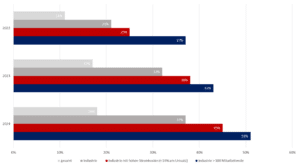
From 6th place to 24th place in just ten years, our once leading industrial nation according to the IMD Competiveness Ranking 2024[1] slipped. 45 percent of industrial companies with high electricity costs are planning or implementing plans to reduce their production or relocate it abroad. Rising trend[2]. Increasing bureaucratic costs and the extremely high energy prices in our country are causing existential problems for many companies, in addition to the shortage of skilled workers. And the new Building Energy Act (GEG) adds another misguided measure.

Ever since the BMWK's concept paper "65% renewable energies for the installation of new heating systems from 2024" announced the contents of the new GEG in July 2022, Thomas Kübler has been warning of the technical errors in the hasty and ideologically driven amendment to the law. He knows all about the Heating Act.

Bar chart on industry development 2022 to 2024

Source: "Energy transition barometer 2024", DIHK, evaluation-energiewende-barometer-2024-data.pdf


"The good news is that there are technically excellent and economical solutions for industrial and commercial buildings to successfully implement the heating transition under affordable conditions," says the experienced specialist in energy-saving hall heating technologies. For non-energy-intensive companies - the lion's share of businesses in Germany - the heating transition is the most important lever for decarbonization. As a rule, over two thirds of energy is used for heating. The fatal thing, according to Thomas Kübler, is that politicians made a whole series of mistakes when drafting the GEG, but against their better judgment are not prepared to rectify them in the current legislative period. Particularly in the area of new construction, the law indirectly prescribes the technology instead of specifying CO₂ targets and leaving the path to the target to the companies, which would have more technical and solution expertise than the political establishment in the BMWK anyway. The restriction to the heat pump preferred by the BMWK for all building types without recognizing the special heating features of halls is bound to go wrong, says Kübler. And would be about as dysfunctional as going on vacation with a concrete mixer. Or like transporting concrete in the trunk of the family car. Both are possible, but not sensible.

In the GEG, politicians continue to equate residential and office buildings, hotels and kindergartens with production or logistics halls. Instead of using the knowledge of specialists to develop correct and functional solutions, they prefer to pursue a landlord-style energy policy. No wonder the energy transition is stumbling.

Berlin is even turning a blind eye to much more suitable technologies for heating hall buildings. Even the latest developments in heating technology, with enormous potential savings of 50 to 70 percent in energy consumption and the corresponding GHG emissions, and the ability to already meet the climate targets of 2045 with renewable energies, are receiving little to no political attention. What remains is the innovation clause in Section 103 of the GEG. Thankfully, this bureaucratic route at least opens up the opportunity to use sensible solutions for tall hall buildings, says Kübler. However, this requires cooperation with the manufacturer, as the relevant information has not yet been legally introduced into the relevant calculation programs used by TGA engineers. As is so often the case in Germany, everything is made more complicated than necessary. Yet it is precisely these heating technologies that will make an important contribution to drastically reducing energy costs and CO₂ emissions for companies and thus counteracting the relocation of important jobs abroad.

"What does this mean for your company, are you also thinking of relocating abroad?" we ask Thomas Kübler. "We have no plans to emigrate. And we're not sticking to the roads either," says the entrepreneur. Instead, he relies on education and knowledge transfer for political decision-makers. "It's time that basic knowledge about gravity became more important than ideological half-knowledge." He is convinced that if the economy acted as superficially as Berlin is currently treating Germany as a business location, there would be a hail of warnings and dismissals.

[1] https://www.imd.org/centers/wcc/world-competitiveness-center/rankings/world-competitiveness-ranking/rankings/wcr-rankings/#_tab_Rank

[2] Electricity prices: How the energy transition is driving industry out of Germany (handelsblatt.com)


You can also read the article in the Handelsblatt: No energy turnaround without an economic policy turnaround! - Handelsblatt Live

KÜBLER is the winner of the Future Prize 2024

The energy-flexible new development FUTURA from hall heating specialist KÜBLER is the winner of the BVMW Future Prize 2024. Founder and managing director Thomas Kübler accepted the award in front of around 6,000 participants at the BVMW Future Day at Station Berlin.

„KÜBLER develops systems that heat industrial and commercial buildings in a highly energy-efficient manner while also providing targeted lighting. With FUTURA, KÜBLER has developed an innovative multi-energy IR hall heating system with integrated lighting that makes an important contribution to the decarbonization of buildings, as it uses all renewable energies digitally controlled via AI,“ said Jeanette Peter, member of the jury and owner of JPeters Consulting, in her laudatory speech. Former Senator Christoph Althaus, Chairman of the Federal Executive Board of Der Mittelstand BVMW e. V., said at the award ceremony: „Congratulations. This is a great honor. But it is well deserved. We really didn't have an easy time of it in the jury. You have made it into the top group here. Keep up the good work! Continue to be a shining example of innovative strength in German SMEs!“

„Thank you very much! Thanks also to our development team, which has done a sensational job here. Building a heating system that is energy-flexible and gives investors absolute investment security and availability. Especially in commercial and industrial buildings. And that is exactly what has ended up on the sidelines of energy policy. Yet these buildings are so extremely important for our value creation. We need to make the energy transition affordable—especially for these buildings. Because that's where our value creation happens, and we need to stop all this red tape and mistakes from suddenly driving away these important jobs. We can make a great contribution to this with the system we have developed here. Because you can use your PV electricity for heating in the same way as hydrogen or natural gas. You can also switch back and forth between the different forms of energy, depending on which is affordable and permitted at the time. I believe that this enables us to make a contribution to Germany as a business location and to securing our jobs,“ said the entrepreneur at the award ceremony.

The BVMW on the 2024 Future Prize, which is being awarded for the second time this year: „It is small and medium-sized enterprises that keep the engine running in Germany. With the Future Prize for SMEs, we are not only addressing the hidden champions, but above all those companies that have managed to come through the transformation process stronger than ever thanks to outstanding innovations, even in times of crisis.“

Revolutionary heat: KÜBLER hall heating systems set a new standard at the Mußbach gymnastics club

"The technology has to be convincing, as does the cost-benefit ratio, and KÜBLER definitely fits the bill."

The gymnastics club's old blower heating system had long been a source of dissatisfaction. Both with Dieter Hackebeil and with all the members. The issue of dust and air turbulence was a particularly acute problem in the gymnasiums. But the noise level was also a frequent source of dissatisfaction. Due to different training times, the requirements for the desired temperature were always different. The fan heating was neither temperature-regulating nor could it be switched on precisely. As club members increasingly complained, it was clear that a new heating system was needed. However, bad experiences in the past meant that the decision was not easy at first.

The objectives for the renewal of the gymnastics club's hall heating system were clear:

  1. Increase the satisfaction of club members with silent heating.
  2. Ensure better controllability of the hall heating with a control system.
  3. And no dust and air turbulence in the hall.

The project

Dieter Hackebeil, former chairman of the board of the Mußbach gymnastics club, knew: "We have to get away from the old forced-air heating system, which is neither efficient nor satisfactory." He came across KÜBLER GmbH through his own research. A competitor was already involved at the beginning, but was quickly rejected. Mr. Hackebeil emphasizes that he has always been a supporter of the region and saw the many advantages of having a company nearby. He describes himself as a layman, who has independently investigated the various techniques. The first consultation with Mr. Bolch was immediately convincing: "Mr. Bolch's visit was competent and unobtrusive. The decision was made immediately: we would realize the project with KÜBLER. To this day, we do not regret this decision in any way." A reference visit to a nearby hall also gave Mr. Hackebeil more insight and allowed him to experience the warmth of the radiant heating systems live for the first time. This also confirmed the decision he had previously made.
Commissioning was carried out in August. It was important to Dieter Hackebeil to install the new hall heating system in the same year. This meant that the first heating period could be used straight away.

"Radiant heat is simply something different. It's much more pleasant and the heat is right where you need it."

Were there any special features or challenges during assembly?

"The only challenge I saw was in our old building. The hall to be heated had been standing since 1936 and the ceiling was not properly insulated," says Dieter Hackebeil. But even that turned out to be no problem in the end. The installation was carried out silently by a local heating engineer. Commissioning was then carried out by an experienced fitter from KÜBLER, who also instructed the responsible colleague in the association on how to control and regulate the hall heating. This expertise enabled a quick familiarization with the control system and optimum operation of the hall heating.

And the bottom line?

Consistently positive feedback from club members. Through various trial runs, energy savings of 40-50 % were already achieved in the first year. Everyone is more than enthusiastic. Satisfied athletes and significantly lower costs - the new heating system has really helped everyone.
"Our training sessions sometimes take place at very different times. Sport used to start at 2 p.m., for example, but the heating had to be switched on at 12 noon due to the long lead time. So much energy was wasted. Now we have to switch on the heating shortly before training starts and we get a pleasant feeling of warmth straight away. The hall heaters from KÜBLER have never disappointed us in recent years and have always been a source of great enthusiasm."

"It is my deep conviction to recommend KÜBLER hall heating systems to others."

What feedback do the members of the gymnastics club give?

Before the heating system was modernized, the response was consistently negative: „What kind of stupid and noisy heating system is this?“ Since the KÜBLER hall heating systems were installed, all we hear is praise. Not a single negative comment has been made. „I also always recommend KÜBLER hall heating systems to others. Not because I benefit from it, but because I am deeply convinced of the technologies and I like to use my voice to encourage even more hall operators or owners to make the switch.“
"KÜBLER will be back in Mußbach at some point, you have to keep up with the times," says Dieter Hackebeil, indicating that the partnership between the club and KÜBLER will remain promising in the future.

Plan your heating maintenance now and start the winter safely

Why it is important to plan heating maintenance right now

Admittedly, as soon as it gets warm outside, nobody thinks about indoor heating. Yet the spring and summer months are the best time for heating maintenance. So if not now, then when? With enough time in advance and in peace and quiet, the hall heating systems can be checked, cleaned and possibly repaired. Or they can even be upgraded to the latest energy-saving technology. That way, you won't be in for a nasty surprise when the cold comes overnight. And finally, it simply feels good to be safely prepared. Because: the next winter is sure to come.

How heating maintenance ensures the operational safety and reliability of the hall heating system

Annual maintenance of your hall heating system ensures that your system works reliably and trouble-free. Small problems can be detected and rectified at an early stage before they lead to major breakdowns. A well-maintained hall heating system enables you to run your business smoothly and ensures optimum productivity during the cold season. Think about heating maintenance now, before the next heating period catches you cold.

Heating maintenance keeps energy efficiency high and costs low

Did you know that 1 °C temperature deviation already leads to 6 % more energy consumption? An optimally adjusted and cleaned heating system works more efficiently and consumes less energy. Heating maintenance can remove dirt and deposits. A study shows that heavy soiling of the reflectors can reduce the usable infrared component of energy-saving hall heaters by up to 10 %. For this reason alone, regular heating maintenance is strongly recommended. Failure to do so will result in rising heating costs, as less heat will reach where it is needed. In addition, oversizing of the infrared appliances would be required to compensate for this. This in turn leads to a further increase in heating costs.
By the way: Which Loss of efficiency You without regular maintenance The study: Influence of reflector soiling on dark spotlights. Would you like to find out more? Then simply request the study. Please feel free to contact us.

Heating maintenance protects the investment and prolongs the life of the hall heating system

Regular heating maintenance increases the service life of the hall heating system. Wearing parts can be replaced in good time before they cause major damage. A well-maintained hall heating system lasts longer and thus minimizes the need for expensive repairs or replacement of the entire system. If you have a maintenance contract, maintenance of the hall heating is usually due every year as standard. Make sure you remember to keep this appointment so that you can benefit from a warranty and safeguard your insurance cover. Because your heating maintenance should not wait.
Arrange your maintenance appointment today or conclude a maintenance contract: https://www.kuebler-hallenheizungen.de/de/wartungsvertrag/

And finally: heating maintenance is a must (even if it doesn't have to be)

As a manufacturer of energy-saving gas-powered hall heating systems, we must draw your attention to the obligation to carry out annual heating maintenance. After all, this is what makes a long and trouble-free service life possible in the first place. But it is also important to remember your insurance cover. Various regulations and legal guidelines apply to infrared-based hall heating systems. For example, the following:

Increase efficiency or modernize? What you can do when heating maintenance is no longer enough

Is your heating system getting on in years? Is it consuming too much energy? Are breakdowns and repair costs increasing? In addition to heating maintenance, you also have the option of upgrading or retrofitting your energy-efficient hall heating systems. A modernized heating system can significantly reduce your energy costs, improve comfort in your hall and meet new legal requirements. What options are open to you? Here are a few tips.

Benefit from digital control technology

Modern hall heating systems are equipped with fully digitalized control technology that enables the heating output to be controlled according to demand and optimizes the entire heating operation. In many cases, they can be easily retrofitted. The intelligent systems ensure fast switch-on and switch-off, uniform heating comfort and minimized energy consumption. To quote KÜBLER: The most economical heating system is the one you don't need! Therefore, make sure that the heating only generates the desired temperature in the hall areas when work is actually being carried out there.

Multi-energy hall heating systems bring an affordable heat transition to your hall

The hall heating specialist KÜBLER has recently started offering energy-open hall heating systems that enable the use of renewable energies. Do you already know the FUTURA multi-energy infrared system? You decide for yourself which energy source is currently the cheapest for you. Be it electricity, hydrogen or (biogenic) gases. This flexibility opens up new dimensions in hall heating. FUTURA offers the icing on the cake with its integrated LED lighting. This multi-award-winning world first not only brings light into your hall, but also makes a further relevant contribution to sustainability that pays off in many ways. Because the 2-in-1 innovation stands for just one cabling, just one control system, just one service point.

Don't forget: Take advantage of the funding opportunities

There are often state subsidy programs for converting to energy-efficient hall heating systems. The Energy management system EMMA for example, is BAFA-listed. Find out about the current funding opportunities to receive financial support for your investment. KÜBLER has also held a number of seminars on the subject of "New subsidies for hall heating systems". Sign up for the newsletter to make sure you don't miss any events.

Conclusion:

Regular maintenance of your hall heating system is important. This is the only way to ensure the reliable operation, high energy efficiency and long service life of your heating system. Simply request your maintenance contract at: service@kuebler-hallenheizungen.de. This means that potential problems can be identified at an early stage and longer waiting times in the "hot" winter months - or even costly downtimes - can be avoided.
Do you already have a maintenance contract? Then it's best to arrange your maintenance appointment now: https://www.kuebler-hallenheizungen.de/de/wartungsvertrag/. Our tip: Take this opportunity to find out how you can upgrade the energy efficiency and usability of your hall heating system - or even how you can make your heating system fit for the heat transition in an affordable and sustainably economical way. The keyword is: multi-award-winning multi-energy infrared system. Or simply: FUTURA.

Heating halls in compliance with GEG from 2024 - but how?

This was certainly not effective. The shock-induced paralysis not only set back climate targets, but also harmed businesses: millions of euros in energy cost savings could not be booked on the credit side. The GEG of 2021 is still valid, and the planned revision explicitly takes into account the special heating conditions of halls that rely on specific technologies such as decentralized infrared heating. Our experts have cleared the jungle of the draft bill for you and marked the sections that are relevant for GEG-compliant Heating halls will also be important from January 1, 2024.

In the new GEG ("65 % renewables for every new heating system from 2024"), the special features of "non-storey buildings" such as industrial and commercial buildings with their typically high ceilings are given due consideration

Highly efficient decentralized hall heating systems such as the KÜBLER FUTURA multi-energy heating system are the ideal solution for heating halls with typical ceiling heights ranging from 4 m to well over 20 m in some cases. With the ability to react quickly and precisely to local and temporal heat requirements - i.e. to provide heat only when it is needed in a specific area - the FUTURA heating system is the first to combine maximum efficiency in heating halls with the use of renewable energies in the form of green electricity and green gases, depending on availability.

Compliance with the new legal requirements (GEG from 2024) is ensured with FUTURA both in the renovation sector and in new builds. This is demonstrated by excerpts from the draft bill

For the renovation of hall buildings, the great energy-saving potential of efficient decentralized heating is also further taken into account by the new GEG

FUTURA in Trier: First multi-energy infrared system for climate-neutral heating of halls in operation

„Our motto is progress“ is the slogan of the forward-looking metalworking specialist in Trier.

The company has also applied this standard to the new 2,800-square-meter hall, which has been in production since 2022. From building insulation to the PV system, from state-of-the-art fiber laser technology to nitrogen self-generation, the highest energy efficiency standards are implemented here. One of the most important components in this regard is the hall heating system. However, the process of getting to this point has all the makings of a corporate thriller.

"Initially, we were still thinking about an underfloor heating/heat pump combination to heat the new halls. After all, it is considered energy-efficient and is subsidized by the state," says Christoph Rotsch, Commercial Director at "Die Kanter". However, after consulting with the regional installation partner, it quickly became clear that different technology would have to be used for hall buildings with their huge room dimensions than for living rooms, offices or kindergartens. He therefore contacted KÜBLER, a proven expert in energy-saving infrared heating technology for industrial halls. The decision in favor of the high-efficiency system was made. That was at the end of June.

"We have implemented a whole host of energy efficiency measures in the new hall, from PV to insulation and machine technology. We clearly wanted the same for the heating."

However, the entrepreneur had done the math without the Federal Ministry of Economics. The Ministry was concerned with the future of gas heating systems and their usefulness. "Kanter & Schlosser" withdrew the contract two weeks after it was awarded. "The uncertainty surrounding the gas supply was simply too great for us," says Christoph Rotsch. KÜBLER then surprised everyone with a world first - developed even before the energy crisis. "In my opinion, we produce the most efficient systems for heating halls. And we have now opened up our high-efficiency technologies to the use of renewable energies," says Thomas Kübler, founder and managing partner of the KÜBLER Group. Obviously at exactly the right time.

"When we got to know FUTURA, underfloor heating was off the table."

"Die Kanter & Schlosser" became a pilot project. "We are always breaking new ground ourselves with many of our projects. We are happy to help shape the process at KÜBLER," says Christoph Rotsch. "When we got to know the FUTURA, underfloor heating was off the table."

The pilot in question is a multi-energy infrared system, also known as multivalent. A world first that builds the bridge to a carbon-free future. It is not for nothing that the new technology bears the name FUTURA. The energy-efficient infrared heating system can use renewable energies such as electricity or hydrogen. At the same time, biogas, natural gas or liquid gas can also be used, switching variably between the energy sources. This works both in mono mode and in a mix. Depending on which energy is currently available or particularly cost-effective. "In this way, we ensure security of supply and stabilize the grids," says Kübler. "But above all, our solution is economical."

"We are thus ensuring security of supply and stabilizing the grids. But above all, our solution is economical."

The multivalent system in Trier went into operation just in time for the 2022/2023 heating period: the infrared systems function from the hall ceiling in the same way as the sun, which heats everything that is illuminated - people, machines and the hall floor. This means that the heat comes simultaneously from above, below and from all sides. This heat transfer is energy-efficient with savings of 50 to 70 percent. "With the FUTURA, we heat flexibly in terms of time and location," says Kübler, "because we only cover the heat demand that actually exists. After all, the most efficient heating system is the one that isn't running."

"With FUTURA, we heat flexibly in terms of time and location, because we only cover the heat demand that actually exists. After all, the most efficient heating system is the one that isn't running."

The heating is switched on according to demand when and where heat is required. It is controlled via the CELESTRA control system, which has been expanded with modules such as WinTec for remote control. The EMMA heat management system was also installed. It provides "Die Kanter & Schlosser" with full real-time transparency of the entire heating process and makes all data available to the management for audits, such as in accordance with DIN EN ISO 50001.

"The best thing for us is that we can now heat with different energies. In future, we will be able to decide flexibly which is the most favorable for us and when."

"We had full confidence in KÜBLER's more than 30 years of experience right from the start," says Rotsch. Now, around three months after commissioning the new system, "Die Kanter & Schlosser" is very satisfied with the decision. "The best thing for us is that we can now heat with different energies. In future, we will be able to decide flexibly which is the most favorable for us and when." With FUTURA, companies are no longer reliant on gas alone. "We currently only heat with electricity. Now in winter, the PV system covers all our costs from around eleven o'clock onwards." In the old building, the heating had previously blown circulating air into the hall. Every time the door was opened, it got really cold and it felt like it took half an eternity to warm up inside again. "We definitely have a completely different heat quality in the hall now. Much more pleasant, much more localized and no more swirling dust. This has also been very well received by the employees."

"We definitely have a completely different heat quality in the hall now."

Rotsch cites the ability to individually heat the various work areas in the hall building or even switch them off when operations are finished as another important advantage. "We have defined four different heating circuits that we can control with the FUTURA system. It saves us a lot of energy if, for example, the metalworking shop stops earlier on Fridays and the heating can be switched off specifically in this area." Wasting energy would be out of the question for the future-oriented company. This is another reason why they are glad to be away from technologies such as underfloor heating, which cannot be controlled according to demand and has to run at night or even at weekends.

"We have already recommended the new FUTURA technology to others and would do so again and again."

The managing director of the innovative hall heating company KÜBLER cannot understand the uncertainty that currently exists in the market. „We have been providing the industry with tried-and-tested solutions for a long time that can reduce energy consumption and CO₂ emissions by up to 70 percent and more.“ But the current crises have thrown politicians into such disarray that urgently needed energy-efficient renovations are being put on hold because it is unclear what will and will not be permitted in the future. At the same time, renewable energies are not yet widely available or sufficient for heating processes in industry and commerce,“ says Thomas Kübler. „What is certain is that heat pump technology is not a real alternative in industrial buildings. If only because it takes away any flexibility for companies to be able to repurpose hall areas or change machine layouts in the future.“ But heat pumps are also unattractive from an economic point of view, regardless of whether they are combined with underfloor heating or radiant ceiling panels. „Companies have to reckon with an investment that is three to four times higher than necessary. And this is with much poorer usability, but with comparable energy efficiency.“

And the conclusion from "Die Kanter & Schlosser"? Christoph Rotsch: "We have already recommended the new FUTURA technology to others and would do so again and again."

New gas heating quickly in 2023 - often the cheapest decision that also pays off for the environment

As a heating expert, what can you do and advise your commercial customers? Every entrepreneur wants to meet the climate targets, but investments also have to be economical. That could be a problem.

From our point of view as experts in sustainable hall heating, there are 3 clever solutions to the problem:

Your recommended solution 1: New gas heating system before the end of 2023

They recommend, for example, the use of proven energy-saving IR heating systems from KÜBLER. Where appropriate, supplement these with condensing boiler technology. This gives your customer the advantage of saving higher investment costs for a hybrid multi-energy system - incidentally, a world first that KÜBLER will be presenting at ISH 2023.

Result: This efficiency measure reduces heating energy consumption by 50 to 70 percent. Incidentally, far more than the legislator requires in its draft. Both GHG emissions and heating costs are reduced accordingly, so that the investment usually pays for itself in two to three years. Your client and the environment will be pleased.

Future steps: The new heating system can be easily adapted to use hydrogen as soon as it is available in sufficient and affordable quantities.

Your recommended solution 2: High-efficiency heating from KÜBLER, including H₂ readiness and retrofit option

You immediately advise your customer to use a high-efficiency system from KÜBLER.

Result: Your customer immediately takes advantage of the possibility of using hydrogen and benefits from the advantages of high energy, emission and cost savings.

Future steps: The high-efficiency system can be easily and inexpensively upgraded for electricity or PV use at any time with a retrofit kit.

Your solution recommendation 3: Build on the world's first multi-energy system from KÜBLER right away

This opens the way for your customer to become CO₂-free. KÜBLER's multi-energy system allows various renewable energy sources such as electricity or hydrogen, but also gas or biogas, to be used variably – in combination or alternatively.

This option gives you the freedom to rely on your own PV electricity right away, for example, and thus achieve a degree of energy self-sufficiency. Active energy management via the control system makes heating costs and CO₂ emissions scalable when using different energy sources—what progress!

By the way: The innovative multi-energy system was awarded the special prize "Innovative technologies for climate protection" at the SUCCESS technology competition at the end of 2022 and has been nominated for the German Innovation Award in 2023.

The bottom line

Never before have you been able to show your commercial and industrial customers such simple solutions for implementing the heat transition. And in a very economical and sustainable way. This is because the investment costs for your customer are comparatively low - they are around a third lower than the costs for heat pumps, for example.

You should also know this: We are happy to support you with our expertise in word and deed for all projects. Let's simply get talking. Our serics and the very latest appliance technology will be happy to present them to you at the ISH. Welcome to our stand B19 in hall 12.01! We look forward to your visit!


Amendment to the Building Energy Act: FDP announces switch from energy efficiency to emission efficiency

The industry is in a debate between regulation and feasibility as well as between focus and openness to technology. Thomas Kübler founded the company of the same name 30 years ago and set up his own R&D unit. Five years ago, the company began developing FUTURA, an innovation for the energy transition. To mark the launch of this unique infrared heating system for industrial halls, experts discussed the challenges of the energy transition. An excerpt from the expert dialog:

Daniel Föst MdB, Building and housing policy spokesman for the FDP parliamentary group in the Bundestag:

"We will have a major amendment to the Building Energy Act next year. At the moment, I have the impression that we are getting bogged down.

I think we need to focus more on solving systemic problems. That's why I believe it makes sense to shift the GEG from energy efficiency to emissions efficiency. We should define how to reduce CO₂ emissions – and not concentrate on a single technology.

Our benchmark should be emissions efficiency."

Franz Untersteller (The Greens), Former Minister of the Environment of the State of Baden-Württemberg:

"It's not enough to say that we want 65 percent renewable energy when installing new heating systems from 2024.

It is important that we avoid CO₂. No matter what technology we use. When I hear some of the debates in Germany, I think: crazy.

We need more pragmatism, which wouldn't hurt in Berlin either. I would like to see more pragmatism, because the issue at stake is CO₂ reduction—and doing so cost-effectively.

Why should Norway only build green hydrogen, but not blue hydrogen as well? I can't see where the problem lies. If Norway goes through with it and we in Germany continue to focus on green, it may be that an energy-intensive company will move away from Germany.

We have been discussing the introduction of smart meters for eight years. I have the impression that there are two or three people in the authorities who want to make everything more and more complicated.

We urgently need to differentiate in the GEG. A daycare center is different from a 40-meter-high hall."

Michael Hauer (The Greens), State Secretary in the Ministry for Climate Protection, Environment, Energy and Mobility of the State of Rhineland-Palatinate:

"KÜBLER GmbH is a beacon in Rhineland-Palatinate. I hope that the innovations that come from here will also be implemented by the entire state. The development of FUTURA is a great opportunity to access energy when it is needed.

We will have to change our behavior and business models. Climate protection targets can no longer be postponed. We need a regional energy transition. And we need technological openness.

We are working with Berlin on a daily basis and will drive forward the GEG in such a way that differentiation takes place in non-residential buildings."

Prof. Dr. rer. nat. Svenja Carrigan, TU Kaiserslautern, Professor of Building Physics Modeling:

„Europe is turning away from primary energy sources and toward CO₂ reduction: Which energy system can I use and how? We need to focus not only on the operation of an energy source, but on its entire life cycle. We need to become more decentralized and think bigger.“

Thomas Niederhofer, Managing Director of the Knauf Interfer Business Unit Steel

"We need new incentives. As a company, we have so much space that we can also install photovoltaics on the ground. But we also need to have the option of crediting electricity and not just blindly firing it into a system. We need more flexibility. In Holland, e-cars are charged at night and used as a battery station during the day when they are not needed as a car.

We have large halls in almost all federal states. First of all, we try to avoid energy consumption in order to reduce CO₂. We will now save approx. 76 % energy in a very large hall that has just been converted because we have opted for KÜBLER technology. With this investment, we have a ROI (return on investment) of only 2.5 years! There's no need to carry the child to the well; from a business perspective, it's simply a matter of self-motivation to do it. The technology is there.

We have also calculated heat pumps for ourselves. We would need a 1000 kilowatt power supply line for this hall. Our energy supply company won't go along with that. It won't work with a heat pump. We also can't install underfloor heating because our floors have to be designed for heavy loads, which no underfloor heating can survive. And radiant ceiling panels on the roof weigh 4 to 5 times more than the KÜBLER technology. The statics of the hall can't withstand that. And even if it did, there would be no static capacity for PV at all. Heat pumps in halls don't work."

Dr. Robert Seguin, Energy and grid specialist, Manager THEMA Consulting Group AS in Oslo/Norway:

"In Norway, 100 percent of energy is renewable thanks to hydropower. The energy system's dependence on the weather will increase the need for flexibility. Without flexibility in the system, the conversion of the energy system will be expensive. Flexibility is needed to cover demand, for the grid and for system stability."

Thomas Kübler, Managing Partner of KÜBLER GmbH:

"We are all the energy transition. Everyone can make their contribution. We do not have to and should not wait for anyone. We can only expect political decision-makers to draw on the expertise of business and science and incorporate it into their decision-making processes.

Companies that reduce their green footprint must be supported. Every euro invested there comes back several times over in taxes. Dear politicians, don't be so stingy.

There is no ideology-bound solution. Make the Building Energy Act open to all technologies!

We are going the wrong way. We must not fight the pain, we have to tackle the causes. Energy that is not needed is good energy.

Flexible tariffs and volatility are essential if the energy transition is to succeed.

We can do the energy transition, we are ready for the energy transition - if we are allowed to. With more flexibility and an openness to technology."

The expert dialog with presenter and ARD climate expert Thomas Ranft can be viewed in full at https://www.youtube.com/watch?v=ej6OX0eMYWM

You can also listen to the Deutschlandfunk report: https://www.deutschlandfunk.de/wahre-energieschleudern-wie-in-industriehallen-energie-gespart-werden-kann-dlf-d0ebf38e-100.html

To the FUTURA:

KÜBLER GmbH is a classic niche expert for heating systems in industrial halls. The Ludwigshafen-based company has its own R&D unit. The latest development from this product forge is the FUTURA, which works independently of the energy source. The infrared heating system for halls uses hydrogen, electricity, gas or a mix of these. It can process green and fossil fuels highly efficiently, thus building a bridge to the carbon-free era.

This works both in mono mode and in mixed mode. Depending on which energy is currently available or particularly cost-effective. "In this way, we ensure security of supply and stabilize the grids," says Thomas Kübler. "But above all, our solution is economical. Infrared is the ideal way to heat large rooms." This refers in particular to halls with a height of four meters or more. The innovative solution also integrates the LED lighting of hall buildings in a single device and can be used for new buildings as well as for the energy-efficient refurbishment of existing buildings.

The state of Rhineland-Palatinate has already awarded the company the "Innovative Technology for Climate Protection" innovation prize for the FUTURA as part of the SUCCESS 2022 competition.

Background:

With ceiling heights of 4 to 40 meters and areas of up to 10,000 square meters and more, their room dimensions cannot be compared with apartments, offices or daycare centres, which are usually built as multi-storey buildings with clear heights of around 2.50 meters. This also applies to the heating of such room colossi - it is incomparably more demanding than in the much lower multi-storey buildings. However, this differentiation is not made in the planned 65% renewable energy rule in the Building Energy Act.

"If such large rooms are to be heated in an energy-efficient manner, very special technologies are required. Rarely has it been as urgent as it is today to use all the technological resources available to us to effectively counter the energy crisis," says Thomas Kübler. He is a proven expert in heating industrial halls.

Kübler says: "Efficient heating is about providing heat with as little loss as possible in the areas of the hall where people work and need heat. As a rule, this is not at a ceiling height of 10 or 20 meters, but in an area around 2.00 meters above the hall floor." This cannot be ensured with a heat pump either. The technology is not made for this.

The efficiency of special hall heating technologies can be seen in energy refurbishment projects for industrial halls. Savings of up to 70 percent are realistic. This relieves the financial burden on companies with cost savings of several tens or even hundreds of thousands of euros per year, depending on the size of the project. The greenhouse gas reductions are correspondingly high.

For this reason, a revision of the Building Energy Act is necessary, in which openness to technology and differentiation between different types of non-residential buildings should be fundamental.
 

Energy turnaround: World innovation honored in Mainz

FUTURA heats industrial halls regardless of the energy source - special award "Innovative technologies for climate protection" in the SUCCESS technology competition

"I am deeply convinced that we can only avoid a national energy crisis with a joint effort. Together - that means that all protagonists have to get involved. Everyone should play their part and contribute their expertise to the process," says Thomas Kübler, founder, partner and Managing Director of KÜBLER GmbH. "We have been doing this for decades now and are delighted that, especially in the current situation, we have developed a technology with FUTURA that can make a decisive contribution to the energy transition."

FUTURA is a bridge to the carbon-free era

Regardless of whether green hydrogen or electricity will shape the future, FUTURA can do both – and more: the infrared heating system also uses biogas, natural gas, or liquid gas and allows you to switch between the different energy sources as needed. This works both in mono-operation and in combination, depending on which energy source is currently available or particularly cost-effective. „We thus ensure security of supply and stabilize the grids,“ says Kübler. „Above all, however, our solution is economical. Infrared is the ideal way to heat large rooms.“ This refers in particular to halls with a height of four meters and more.

Infrared heating works in the same way as the sun.

The FUTURA is installed on the hall ceiling. It heats everything that is illuminated: people, machines, the hall floor. This means that the heat comes from above, below, and from all sides at the same time. This heat transfer is energy-efficient, with savings of 50 to 70 percent. „With FUTURA, we can heat flexibly in terms of time and location,“ says Kübler, „because we only cover the heat demand that actually exists. After all, the most efficient heating system is one that is not running.“ The heating is switched on as needed, when and where heat is required. Efficiency First is thus fulfilled, and FUTURA is probably the most efficient answer to a complex, difficult heating task that makes economical use of renewable energies at the highest level. Incidentally, the jury also honored FUTURA for its second technical innovation, as the multi-energy infrared heating system optionally provides energy-saving LED hall lighting in addition to heat. This sustainable two-in-one solution saves the user a complete cabling system, including switch units and controls. In the future, only one maintenance service will be required, covering both aspects.

With FUTURA, KÜBLER GmbH is bringing about a paradigm shift in energy efficiency. After all, only two percent of all buildings in Germany are halls. These halls account for 15% of building-related energy consumption in Germany and the associated greenhouse gas (GHG) emissions. The new system has been developed for new buildings, but the industry can also use FUTURA to refurbish existing buildings without interrupting operations.