KÜBLER hall heating systems

Heating systems for industrial buildings

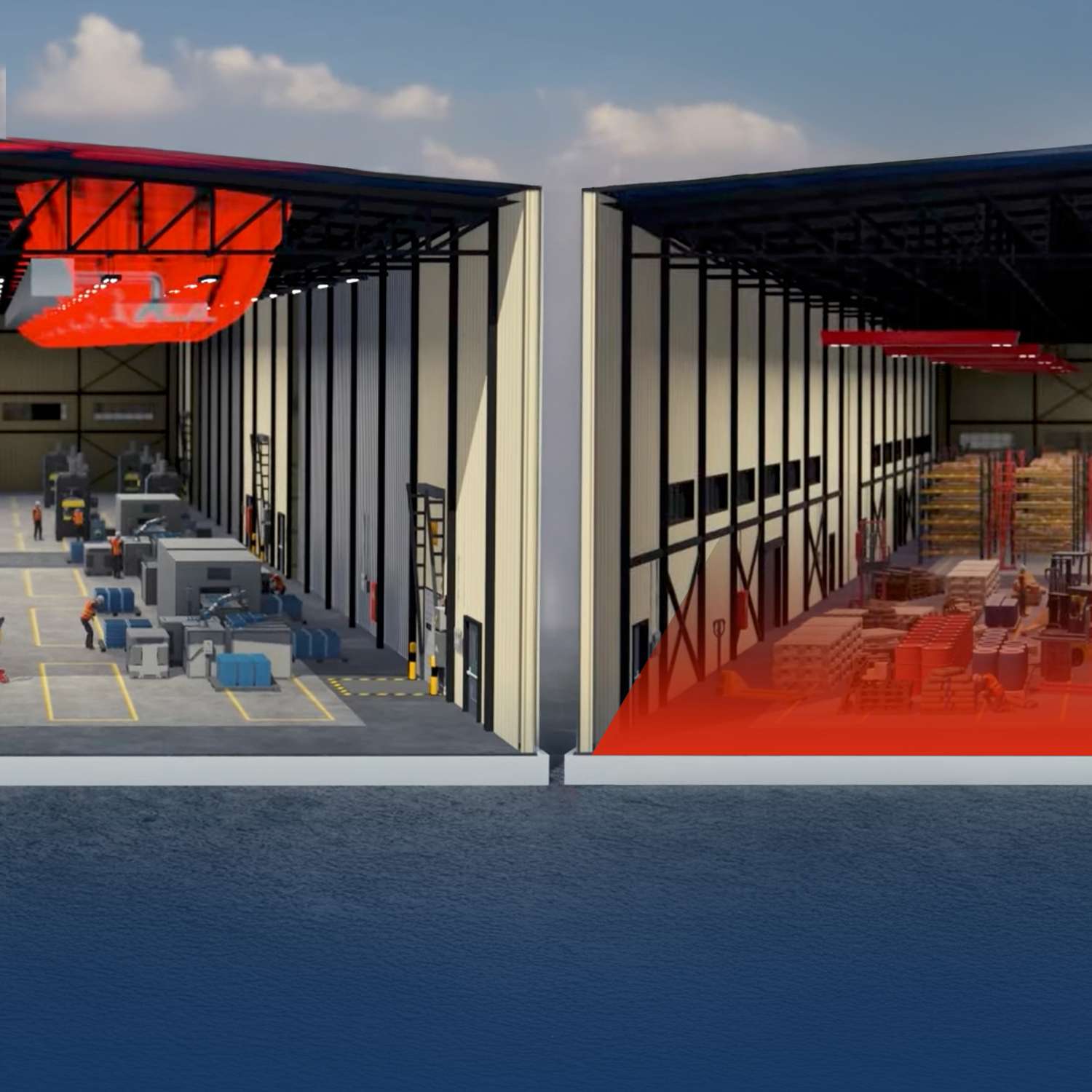
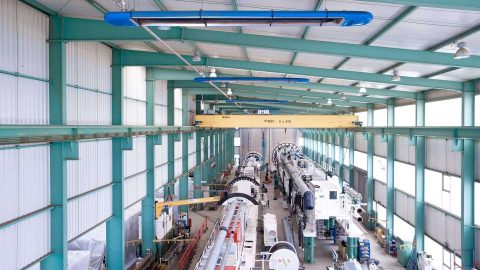
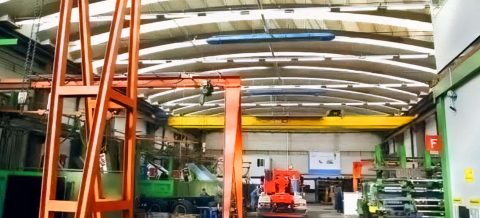
With infrared hall heaters from KÜBLER, you can heat industrial halls in an energy-efficient, reliable manner and precisely where heat is really needed—at the bottom, directly in the work areas.
Industrial buildings are heating challenges that require ingenuity.

Why infrared heating is particularly well suited for industrial applications

Industrial buildings have special requirements when it comes to heat supply: high ceilings, large room volumes, and door openings that constantly allow air to circulate. Radiant heat offers a clear advantage in this regard. It acts directly in the occupied area and reaches the workplace regardless of how much air is moving in the building.
At the same time, different areas in the hall can be heated to specific temperatures. Production zones, assembly areas, or shipping areas can be heated as needed, while less frequently used areas remain at lower temperatures. This ensures pleasant temperatures at relevant workstations and avoids unnecessary energy consumption.

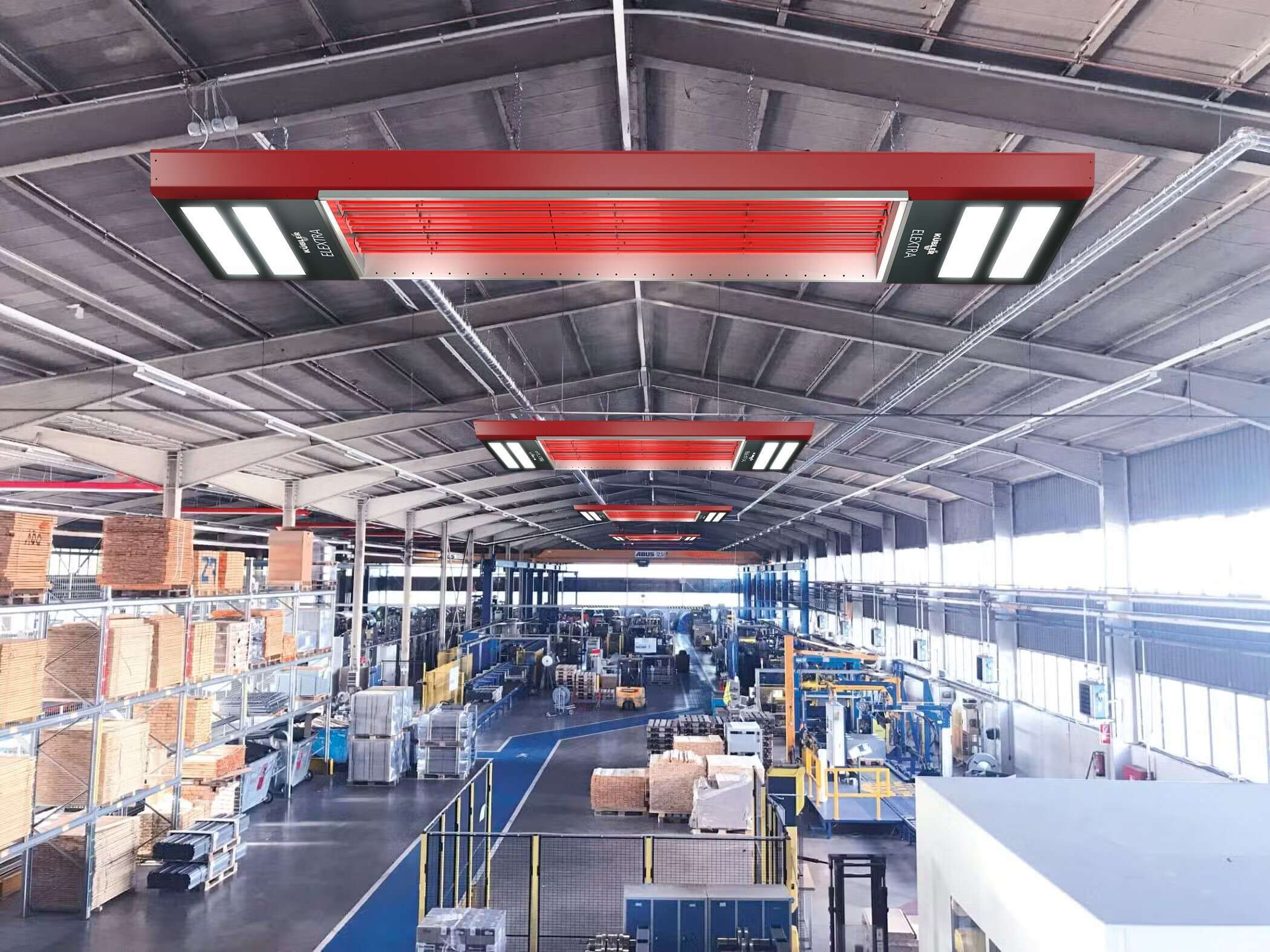
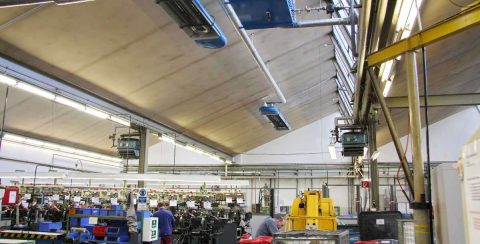
Installation beneath the ceiling structure leaves the floor infrastructure free, with no impact on traffic routes or machine installations. The technology is designed for continuous industrial operation and works reliably in the background—a heating system that fits seamlessly into everyday hall operations.
All advantages at a glance

The efficiency advantages of KÜBLER infrared hall heaters

Infrared hall heaters operate on a different principle than conventional air heaters. This results in a number of advantages that are particularly beneficial in industrial halls. Here is an overview of the most important ones:
Red check mark icon for confirmation
Minimized energy consumption
Infrared heat acts directly in the occupied zone. This means that large volumes of air do not need to be heated—a decisive advantage in high halls, which noticeably reduces energy consumption.
Red check mark icon for confirmation
Immediate warmth after switching on
KÜBLER systems deliver infrared heat with virtually no lead time. This makes the heating flexible for shift operation, partial use, and situations where heat is needed quickly and selectively.
Red check mark icon for confirmation
Efficient zone control even in open halls
Work areas can be precisely controlled, regardless of whether doors are open or air movement occurs. This keeps comfort levels stable and energy consumption under control.
Red check mark icon for confirmation
No draft
Since radiant heat does not primarily cause the air to heat up, there are no drafts or dust swirls. Employees benefit from a pleasant, calm feeling of warmth—especially in sensitive workplaces.
Red check mark icon for confirmation
Satisfied employees
Radiant heat acts directly in the work area and ensures a pleasantly balanced temperature experience—without drafts or significant fluctuations. This creates a comfortable indoor climate and supports comfortable working conditions in all areas of the hall.
Red check mark icon for confirmation
High operational reliability in industrial environments
KÜBLER systems are designed for intensive indoor use: robust components, low susceptibility to faults, and easy maintenance ensure predictable and reliable heat supply.
Red check mark icon for confirmation
Low investment costs
Installation is decentralized under the hall ceiling, without water-based infrastructure or major modifications. This ensures low investment costs and makes retrofitting existing buildings particularly economical.
KÜBLER hall heating systems

Which energy source do you want to use to heat your industrial building?

Modern hall heating systems today have to cover an enormous range of operating conditions. Production facilities, logistics areas, and sports and event venues differ fundamentally in how and where heat is needed.

This is exactly where KÜBLER heating solutions come in. Not only are they powerful and energy-efficient, they can also use a wide variety of energy sources – from gas and electricity to hydrogen. In addition, hybrid systems allow multiple energy sources to be combined to ensure maximum efficiency and operational reliability. KÜBLER thus offers one of the most diverse and modern portfolios for the climate-conscious heating of large halls.
Hybrid multi-energy hall heating systems
Flexible energy thinking: KÜBLER's multi-energy systems—such as the Fair.AIdH solution FUTURA—combine various sources such as gas, electricity, or hydrogen, depending on availability. For maximum supply security and full future viability.
Electric infrared hall heaters
Heating with electricity – clean, direct, and ideal for industrial buildings with PV systems or without gas connections. KÜBLER's electric infrared solutions (Fair.AIdH) deliver precise heat to the work area, with no emissions on site.
Electric hall heating 
Gas infrared hall heaters
For over 35 years, KÜBLER has been developing powerful, gas-powered infrared systems for industrial buildings. They impress with their high efficiency, short payback periods, and clear savings potential—even in large spaces with high ceilings.
Gas hall heating
Hydrogen infrared hall heaters
The green gas of the future – scalable for use in industrial hall heating systems. KÜBLER's infrared solutions are already H₂-compatible and can be flexibly converted to hydrogen in the future.
Hydrogen hall heating 
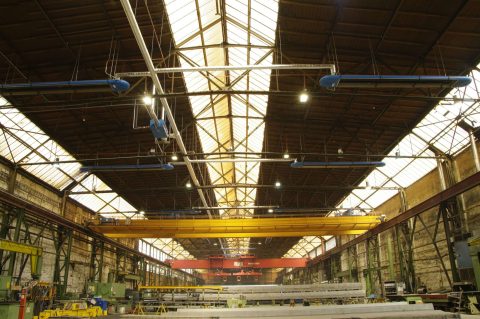
Large modern industrial hall with metal structure and lighting

What is the ideal heating system for industry?

Industrial companies face unique challenges when it comes to heating their buildings: high ceilings, large doorways, changing uses, and increasing demands for efficiency and climate protection. To ensure that the heat reaches the right place—and doesn't just remain expensively trapped under the roof—the heating solution must be suited to the type of building, the processes, and the company's energy concept.

Below, we take a look at the factors that are crucial when selecting the ideal heating system for industrial buildings.

Legal and labor law requirements
Anyone who wants to heat industrial buildings must always comply with regulations, including energy law and occupational safety regulations. Both of these factors determine which heating solution is permissible in the long term, economical, and reasonable for employees.

1. Building Energy Act (GEG): Efficiency and climate protection requirements
The Building Energy Act defines how efficient and climate-friendly new heating systems must be, distinguishing between new buildings and existing buildings. In this context, there is often talk of the „65 % rule“ for renewable energies. This refers to new hall buildings. Energy efficiency is crucial when renovating industrial buildings: if 40% or more energy is saved, this is considered to fulfill the GEG requirements even without renewable energy. In this case, infrared industrial heaters can continue to be used in pure gas operation.

2. Workplace Directive ASR A3.5: Minimum temperatures in the workplace
The Workplace Ordinance with ASR A3.5 specifies the minimum temperatures that must be maintained in workspaces, depending on the activity and the severity of the work. For industrial workplaces in assembly, manufacturing, or logistics, this means that the temperature must be right where people actually work—not just somewhere in the hall, often many meters above the work areas.

Radiant heating systems demonstrate their strengths here. Infrared heat acts directly on people, floors, and surfaces in the occupied area. This allows the required temperature level to be achieved in a targeted manner without having to heat the entire air column up to the hall ceiling at great expense.

A simplified overview of typical minimum temperatures according to ASR A3.5:

Hard workPredominant postureminimum temperature
light workSitting20 °C
light workStanding / Walking19 °C
average activitySitting19 °C
average activityStanding / Walking17 °C
heavy workStanding / Walking12 °C
Industrial and commercial hall heating systems

Functional requirements in industrial buildings

Conventional industrial heating systems often have a problem in hall buildings: it gets particularly warm under the hall ceiling. Up there, too much of the expensive energy is wasted as unused warm air pockets. A modern infrared industrial hall heating system is more economical and efficient. This is probably the most efficient method of heating halls and specifically heats the areas where heat is actually needed. So you gain twice: through a pleasant working climate and up to 70 % energy and cost savings.
Zone- and area-based heating
In a hall, there are heavily used work areas and less used areas. Infrared hall heaters can be divided into zones and controlled so that only those areas where work is actually being done are heated.
Gate traffic and air exchange
Frequently opened hall doors allow warm air to escape easily. Radiant heat has a direct effect on people and surfaces – comfort in the lounge area remains significantly more stable, even in drafty conditions.
Space requirements and integration
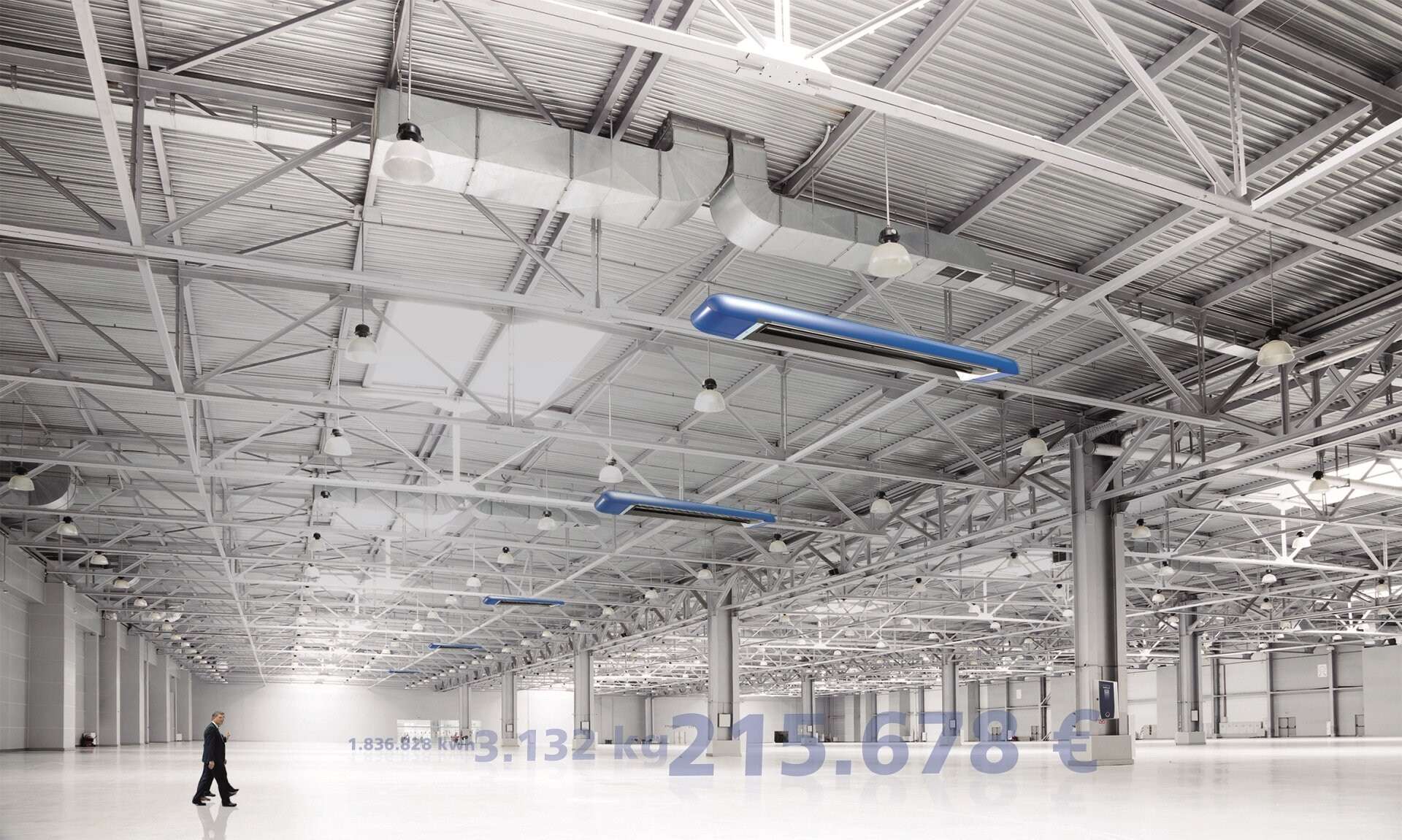
Shelves and traffic routes limit the space available on the floor. Decentralized infrared dark radiators are mounted under the ceiling to save space and do not interfere with logistics or machine installations.
Robustness in everyday industrial use
Dust, moisture, and shift work require robust technology. Industrial-grade infrared hall heaters are durable, easy to maintain, and, in special designs, also suitable for demanding areas.
Energy efficiency

Legal and labor law requirements

Heat where it is needed
Infrared hall heaters do not heat the air volume, but rather the floors, surfaces, and people in the work area. Less heat is „lost“ under the hall roof—most of it actually reaches the workplace.
Only used zones are heated
With zone-based control, you only heat production, assembly, or logistics areas where work is being carried out. Unused areas remain at a lower temperature. This reduces energy consumption in the long term.
Fast response instead of sluggish systems
With zone-based control, you only heat production, assembly, or logistics areas where work is being carried out. Unused areas remain at a lower temperature. This reduces energy consumption in the long term.
High system efficiency in high-ceilinged halls
Radiant heat really comes into its own in high industrial halls. Instead of heating the entire air column, only the occupied area is heated. This allows for significant savings compared to conventional hall heating systems in hall projects—with noticeably better working conditions.
Cleverly controlling heating output

Control, smart heating, and digitization

Modern hall heating systems no longer operate on the principle of „always on,“ but rather according to demand. Production areas, order picking, and warehouses can be divided into zones, each with its own setpoints and time programs. This means that only those areas where work is actually being carried out are heated to the required temperature, while unused areas remain at a lower temperature. This saves a huge amount of energy and costs.
Important to know: The Building Energy Act expressly stipulates that building automation and functions for monitoring and evaluating energy consumption must be used in non-residential buildings with larger heating or cooling systems. Anyone who wants to use energy efficiently should therefore also have digital control over their systems.

This is exactly where KÜBLER comes in. Infrared hall heaters are always planned as a system – with suitable control technology such as CELESTRA and energy management solutions such as EMMA. This makes it easy to control zones, times, and temperatures, make consumption transparent, and leverage optimization potential in a targeted manner. Every kilowatt hour of heat is used where it is needed: in the work area, not throughout the entire hall.
Efficient control

Control, smart heating, and digitization

In high halls, classic warm air heating has a disadvantage: the warm air collects under the roof, while the floor remains significantly cooler. This costs energy—and comfort. Infrared hall heaters work differently. They primarily heat people and surfaces in the occupied area, not the entire air column. Expensive heat pockets under the hall roof do not even arise. The result: less loss, more usable heat exactly where work is being done.

Future-proof energy sources

Energy prices, CO₂ costs, and legal requirements are changing—but heating for industrial buildings needs to remain. That's why it's crucial to have a system that can adapt to different energy sources rather than dictating them.

With FUTURA, KÜBLER offers an infrared hall heating system with modern Fair.AIdH technology that was developed precisely for this purpose. It is multi-energy capable and H₂-ready: it can be operated with gaseous energy sources, electricity, or a combination of both—today in conjunction with its own PV electricity, and in the future also with hydrogen.

The heat distribution in the hall remains unchanged; only the energy source can be adjusted. This means that the heating solution remains efficient, legally compliant, and future-proof for many years to come—regardless of how the energy mix in the company develops.

Save energy – without any investment: simply rent your industrial hall heating system

Would you like to reduce your energy costs without purchasing your own heating system? With HeizWerk, KÜBLER offers a rental solution for modern industrial hall heating systems—including planning, technology, and operation. This allows you to benefit immediately from efficient, precise heating without tying up capital or straining your investment budget.
Learn more about HeizWerk
KÜBLER hall heating systems

Let's take the next step together

Every hall is different. With more than 35 years of company history, there is hardly a requirement that is unfamiliar to us. Together with our customers, we have implemented the right solutions. If you are ready to implement economically proven heating concepts for your hall, then you have come to the right place.
Arrange a consultation now
Request a guide now