So that Germany doesn't run out of gas: switch to energy-saving industrial heating now
July 14, 2022

What is probably the most effective lever against the gas crisis, price pressure and dependence on Russia at the moment? The answer: consuming less energy. The German government is of this opinion and is calling for energy savings in a large-scale campaign - supported by industry and associations. This goal can be achieved. When it comes to the large halls of industrial and commercial enterprises, it is even easier and quicker than expected.
Knowing how - the right technology makes saving energy easy
How to make saving energy easy? While heat pumps are currently the trend in private households and other multi-storey buildings, the situation is physically and technically quite different when it comes to heating tall hall buildings. Those who want to react flexibly to short-term changes in heating requirements and who want to remain variable for future hall conversions opt for industrial heating systems that have been specially developed for heating halls. These heaters are modern high-efficiency systems and offer a wide range of benefits in industrial, commercial and municipal buildings:
- 30 - 70 percent sustainable energy savings
- Can be operated variably with methane, green hydrogen and/or biogas
- Flexible adaptation to changes in use
- often the only sensible solution for existing buildings
- Fast amortization and high environmental benefits
- pleasant, uniform, draught-free working environment
- Precisely adjustable for changing heating requirements
- Can be expanded with condensing boiler technology as a hybrid system through to digital hall heating
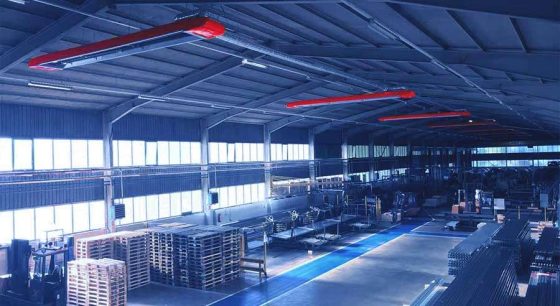
Infrared dark radiators are specifically designed for the special room dimensions and conditions of use in halls. They can be implemented very easily, very economically and quickly. The practical example of a mechanical engineering company in North Rhine-Westphalia shows just how interesting this technology is for industrial and commercial enterprises. There, the energy costs for heating the 6,300 square meter hall area were reduced by around 65 percent. Based on current energy prices, this would mean a cost reduction from around 170,000 euros to around 83,300 euros - a saving of around 86,700 euros.
Halls need special heating systems
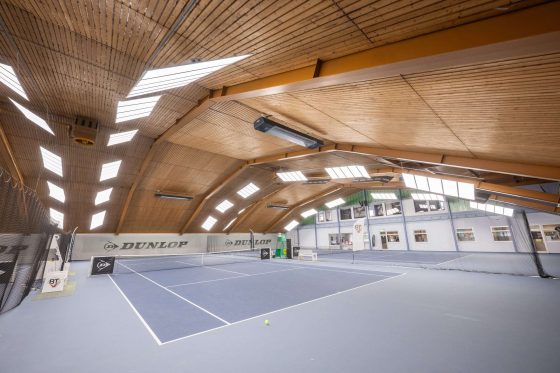
Halls differ from other buildings in terms of their ceiling height, room size and changing usage profiles. It is important to understand this difference when selecting sustainable and efficient heating technology for production, storage, sports, event and other halls. Residential and office buildings, kindergartens, hospitals and other non-residential buildings in multi-storey construction with clear heights of around 2.50 meters are relatively easy to heat. Hall buildings with room heights of 4 - 40 m and floor areas of 100 - X-1,000 m² are a real challenge for heating due to their special building physics conditions. In order to be able to heat these buildings functionally, economically and ecologically, heating systems specially developed for hall buildings are used.
Modern industrial heating systems such as infrared radiant heaters, which can be operated extremely efficiently with natural gas, liquid gas, biogas or hydrogen, are considered the technology of choice. These modern high-efficiency technologies have nothing in common with gas heating systems used in homes or offices. While warm air in multi-storey buildings remains almost 100% usable in the room, in halls it rises out of the usage area up to high below the hall roof. This is one reason for the great superiority of infrared technology for heating hall buildings.
Everything you need to know about energy-saving hall heating systems in practice
Saving energy is a big issue - across all sectors. If you want to put an end to inefficient heating systems, our guide is just right for you!
Request a free guide
You might also be interested in
-
 A funding program that still has an impact today Anyone who deals with the financing of sports facilities will sooner or later come across the term „Golden Plan“. For decades, it symbolized the systematic expansion of sports grounds, halls and swimming pools in Germany. But anyone looking for a specific funding program with this name today will quickly discover that [...]
 -
 The uncertainties in the Middle East in particular are having a direct impact on the price of oil and natural gas. Experts expect energy prices to remain under pressure in the coming months - with a clear upward trend. Current forecasts show1): Natural gas prices could rise by +10 % to +30 % depending on market developments; at times, [...]
 -
 A new heating system for your company's hall is a decision that needs to be carefully considered. Read this article to find out which facts speak in favor of an infrared radiant heater!
 -
Operators of indoor heating systems are also responsible for having their system serviced regularly. In addition to operational safety, there are other good reasons why maintenance should not be put on the back burner!