Energy-efficient infrared hall heating systems: How to reduce heating costs
December 3, 2025
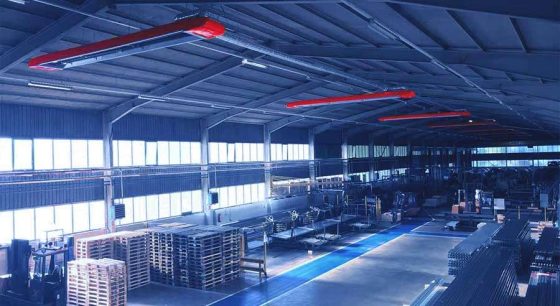
Modern infrared heating systems are characterized by their high energy efficiency in production halls or logistics buildings and can reduce energy consumption by 50 to 70 percent. This is due to the physical principles of infrared radiation: unlike conventional heating methods, infrared rays directly heat the people and surfaces they hit without primarily heating the air. This means that heat is provided directly at the relevant points in a hall, such as the floor and the work area, while the air space above remains largely unheated.
In comparison, fan heaters rely on the distribution of warm air. This method causes the air in the hall to rise, with the warmest areas being directly under the ceiling. It therefore takes significantly longer for the work area to warm up, which leads to higher energy consumption. This difference makes infrared heating systems particularly energy-efficient, especially in large production halls and warehouses.
Another advantage of infrared hall heating systems is their decentralized and intelligent control. This allows these systems to be used in a targeted manner and according to demand in order to further reduce heating costs:
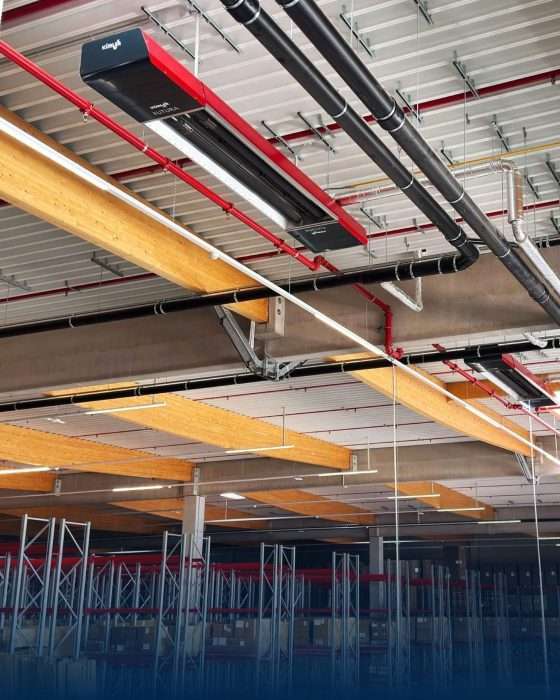
- Compact 2-in-1 technology: Infrared heating systems combine heat generators and heat exchangers in a single device. This means that additional components such as boiler rooms, storage tanks, and piping are not required, thereby preventing energy losses.
- Heat regulation tailored to requirements: The heating output is adjusted to the actual requirements of the work areas, which leads to a reduction in energy consumption.
- Flexibility: Infrared heating systems can be switched on or off at short notice, so that no unnecessary energy is wasted on non-working days or weekends.
- Digital control: Modern control technology allows the heating to be regulated optimally, enabling additional savings through energy management, automatic shutdowns when doors are open, and other measures.
- Residual heat utilization: Modern solutions can be combined with condensing technology, such as the H.Y.B.R.I.D. system (heating, control, condensing technology), thereby utilizing residual heat to further increase efficiency.
- Energy flexibility: Hybrid infrared systems, such as FUTURA and MAXIMA E-Hybrid, can use different energy sources such as electricity, hydrogen, and biogenic gases in a single system, offering additional opportunities for cost reduction.
The conclusion: Modern infrared hall heating systems not only offer a good way to sustainably reduce operating costs in production halls and warehouses. They are also often a particularly effective and cost-efficient means of energy-efficient renovation of hall buildings without having to interfere with the building fabric.
Everything you need to know about energy-saving hall heating systems in practice
Saving energy is a big issue - across all sectors. If you want to put an end to inefficient heating systems, our guide is just right for you!
Request a free guide
You might also be interested in
-
 A new heating system for your company's hall is a decision that needs to be carefully considered. Read this article to find out which facts speak in favor of an infrared radiant heater!
 -
Operators of indoor heating systems are also responsible for having their system serviced regularly. In addition to operational safety, there are other good reasons why maintenance should not be put on the back burner!
-
 The German government is sticking to its goal of climate neutrality by 2045. The GMG is to come into force on 01.07.2026. The EU Buildings Directive (EPBD) will be implemented 1:1, making full use of national leeway. The requirements of the Heating Act (GEG §§ 71-71p) will be deleted. The obligation to operate new heating systems with at least 65 % renewable energy will no longer apply to new and existing buildings. Technology openness: Owners [...]
 -
 Germany has a huge number of buildings whose heating systems waste energy every day and produce far too much CO₂. With regard to the use of renewable energies and modern technologies, it is by no means just an old stock that urgently needs to be refurbished. Many newly built halls are also equipped with outdated [...]