Energy turnaround: World innovation honored in Mainz
December 6, 2022
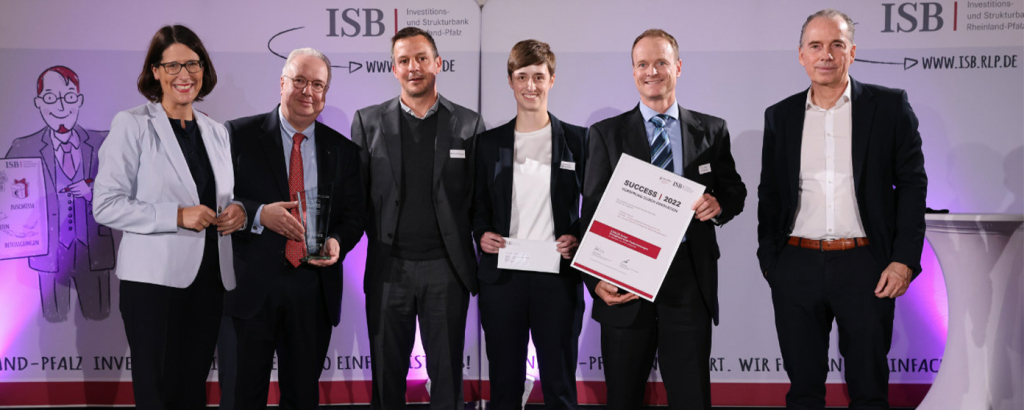
Mainz. While Germany is discussing the energy transition, KÜBLER GmbH from Ludwigshafen has already delivered. FUTURA is the name of the latest invention from the experts for hall heating systems - and it works regardless of the energy source: the infrared heating system for halls uses hydrogen, electricity, gas or a mix of these. It can process green and fossil fuels highly efficiently, thus building a bridge to the carbon-free era. This is one of the reasons why the Investitions- und Strukturbank Rheinland-Pfalz (ISB) and the Ministry of Economic Affairs, Transport, Agriculture and Viticulture awarded KÜBLER the special prize "Innovative Technologies for Climate Protection" at the SUCCESS Innovation Award on Tuesday evening.
FUTURA heats industrial halls regardless of the energy source - special award "Innovative technologies for climate protection" in the SUCCESS technology competition
"I am deeply convinced that we can only avoid a national energy crisis with a joint effort. Together - that means that all protagonists have to get involved. Everyone should play their part and contribute their expertise to the process," says Thomas Kübler, founder, partner and Managing Director of KÜBLER GmbH. "We have been doing this for decades now and are delighted that, especially in the current situation, we have developed a technology with FUTURA that can make a decisive contribution to the energy transition."
FUTURA is a bridge to the carbon-free era
Regardless of whether green hydrogen or electricity will shape the future, FUTURA can do both – and more: the infrared heating system also uses biogas, natural gas, or liquid gas and allows you to switch between the different energy sources as needed. This works both in mono-operation and in combination, depending on which energy source is currently available or particularly cost-effective. „We thus ensure security of supply and stabilize the grids,“ says Kübler. „Above all, however, our solution is economical. Infrared is the ideal way to heat large rooms.“ This refers in particular to halls with a height of four meters and more.
Infrared heating works in the same way as the sun.
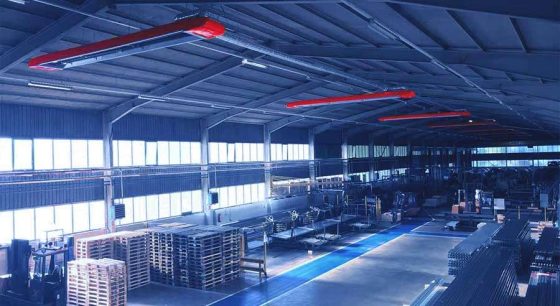
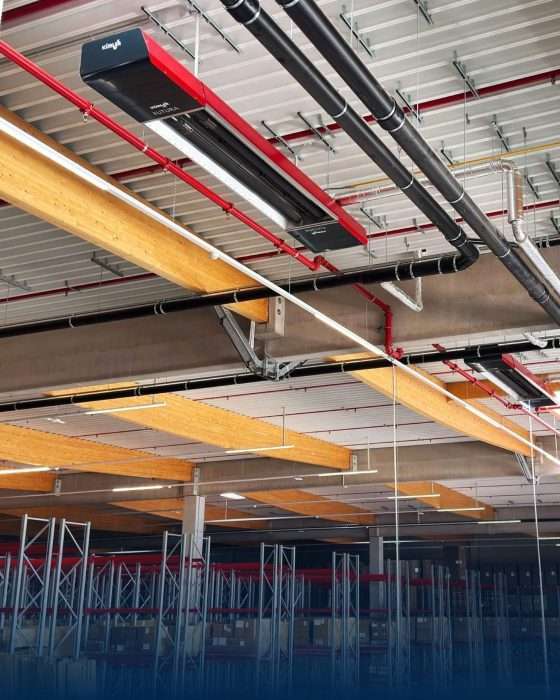
The FUTURA is installed on the hall ceiling. It heats everything that is illuminated: people, machines, the hall floor. This means that the heat comes from above, below, and from all sides at the same time. This heat transfer is energy-efficient, with savings of 50 to 70 percent. „With FUTURA, we can heat flexibly in terms of time and location,“ says Kübler, „because we only cover the heat demand that actually exists. After all, the most efficient heating system is one that is not running.“ The heating is switched on as needed, when and where heat is required. Efficiency First is thus fulfilled, and FUTURA is probably the most efficient answer to a complex, difficult heating task that makes economical use of renewable energies at the highest level. Incidentally, the jury also honored FUTURA for its second technical innovation, as the multi-energy infrared heating system optionally provides energy-saving LED hall lighting in addition to heat. This sustainable two-in-one solution saves the user a complete cabling system, including switch units and controls. In the future, only one maintenance service will be required, covering both aspects.
With FUTURA, KÜBLER GmbH is bringing about a paradigm shift in energy efficiency. After all, only two percent of all buildings in Germany are halls. These halls account for 15% of building-related energy consumption in Germany and the associated greenhouse gas (GHG) emissions. The new system has been developed for new buildings, but the industry can also use FUTURA to refurbish existing buildings without interrupting operations.
Everything you need to know about energy-saving hall heating systems in practice
Saving energy is a big issue - across all sectors. If you want to put an end to inefficient heating systems, our guide is just right for you!
Request a free guide
You might also be interested in
-
 A new heating system for your company's hall is a decision that needs to be carefully considered. Read this article to find out which facts speak in favor of an infrared radiant heater!
 -
Operators of indoor heating systems are also responsible for having their system serviced regularly. In addition to operational safety, there are other good reasons why maintenance should not be put on the back burner!
-
 The German government is sticking to its goal of climate neutrality by 2045. The GMG is to come into force on 01.07.2026. The EU Buildings Directive (EPBD) will be implemented 1:1, making full use of national leeway. The requirements of the Heating Act (GEG §§ 71-71p) will be deleted. The obligation to operate new heating systems with at least 65 % renewable energy will no longer apply to new and existing buildings. Technology openness: Owners [...]
 -
 Germany has a huge number of buildings whose heating systems waste energy every day and produce far too much CO₂. With regard to the use of renewable energies and modern technologies, it is by no means just an old stock that urgently needs to be refurbished. Many newly built halls are also equipped with outdated [...]