Is the GEG hindering the heating transition?
February 11, 2026
Infrared heating systems ensure very high energy efficiency in large halls, but the German government only promotes heat pumps, criticizes specialist Thomas Kübler.
Mr. Kübler, your company produces heating systems for halls. These only make up a small proportion of all buildings in Germany. Why is it nevertheless important to save as much energy as possible in this area?
That's right, the halls only make up around 1.5 percent of buildings in Germany and therefore don't catch the eye of most people. Politicians are also not paying enough attention to them in the energy transition. This is astonishing, as halls are responsible for around 15 percent of heat consumption in Germany. Saving energy here is therefore highly relevant.
And what does an energy-efficient heating system for large halls look like?
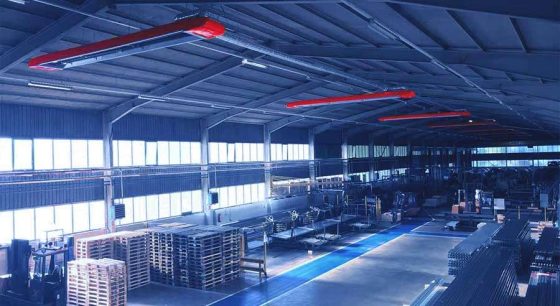
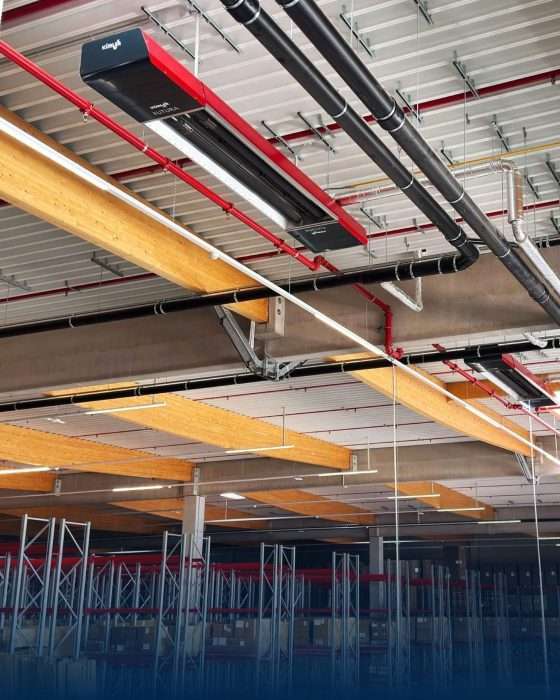
We have been working with highly energy-efficient infrared heaters since 1989. Back then, nobody else was talking about saving energy. Since then, of course, we have developed the technology considerably, digitized it and opened it up to renewable energies. The advantage of infrared heating is that, like light, you can direct the heat exactly where it is needed and simply switch it off again when no work is being done there. In a huge and high hall, it makes sense to heat only the lower area where the employees are. And only when people are actually working there. This is exactly what is possible with infrared heating. If, as with conventional and heat pump heating systems, you inevitably heat the entire hall, including the upper 80 percent where no one is present, this is a gigantic waste of energy. This is why infrared heating systems in halls are at least on a par with heat pumps in terms of efficiency - in most cases, infrared is even superior.
What savings potential are we talking about?
With infrared heating, you can save up to 70 percent energy and CO2 in a large hall. That is our experience from more than 20,000 projects that we have implemented. And what's also important: installation is very simple and straightforward as part of a refurbishment. Infrared heating is undoubtedly the most efficient technology available for hall buildings - and at the same time highly usable.
Which energy sources can infrared heaters work with?
It doesn't matter which energy source you work with, because infrared heating works with electricity, gas and biogas and with hydrogen, which is a very important energy source without which the energy transition will not work. Companies that use electricity can obtain a large proportion from a photovoltaic system. If they save 70 percent energy anyway and then get an additional 50 percent from solar energy, they can save up to 85 percent CO2 emissions from a standing start. Thanks to this incredible efficiency, the cost of installing the infrared heating system is amortized in just a few years. Infrared heating is therefore not only good for the climate, but also for companies' finances.
Then surely the Federal Minister of Economics Robert Habeck, who is in charge of the energy transition, has already sent you a letter of thanks for your innovation, right?
Unfortunately not, but quite the opposite. We have a simple and very efficient solution that has been tried and tested over decades, but politicians are obstructing us instead of supporting us. The Federal Ministry of Economics, led by the Greens, is fully committed to the heat pump. Instead of proactively involving companies like us, who have a great deal of experience and knowledge, in the decision-making process, they have simply rushed through the Heating Act, which relies exclusively on heat pumps, with a good dose of ideology and resistance to advice. However, this usually makes no sense for large halls. But now they can't simply admit that this was a mistake. Our system was also excluded from funding by the ministry. Instead, huge sums of money are being wasted on promoting heat pumps, which are much less useful in halls.
What do you expect from politicians?
What we urgently need is much greater technological flexibility. It would be up to politicians to define the goal, i.e. the energy transition, but to leave all paths to it open to companies that have experience and knowledge. However, this is not the way things are going and I fear that nothing will change, at least in this legislative period, but probably even in this decade. One consequence of this policy is that almost all heating manufacturers are on short-time working or have even had to make people redundant - skilled workers who may be lost forever. In the end, it will once again be foreign companies doing the business, even though we have a lot of expertise and good solutions here in Germany. But this is systematically hindered by politics.
Everything you need to know about energy-saving hall heating systems in practice
Saving energy is a big issue - across all sectors. If you want to put an end to inefficient heating systems, our guide is just right for you!
Request a free guide
You might also be interested in
-
 A new heating system for your company's hall is a decision that needs to be carefully considered. Read this article to find out which facts speak in favor of an infrared radiant heater!
 -
Operators of indoor heating systems are also responsible for having their system serviced regularly. In addition to operational safety, there are other good reasons why maintenance should not be put on the back burner!
-
 The German government is sticking to its goal of climate neutrality by 2045. The GMG is to come into force on 01.07.2026. The EU Buildings Directive (EPBD) will be implemented 1:1, making full use of national leeway. The requirements of the Heating Act (GEG §§ 71-71p) will be deleted. The obligation to operate new heating systems with at least 65 % renewable energy will no longer apply to new and existing buildings. Technology openness: Owners [...]
 -
 Germany has a huge number of buildings whose heating systems waste energy every day and produce far too much CO₂. With regard to the use of renewable energies and modern technologies, it is by no means just an old stock that urgently needs to be refurbished. Many newly built halls are also equipped with outdated [...]