When will the improved Heating Act come into effect?
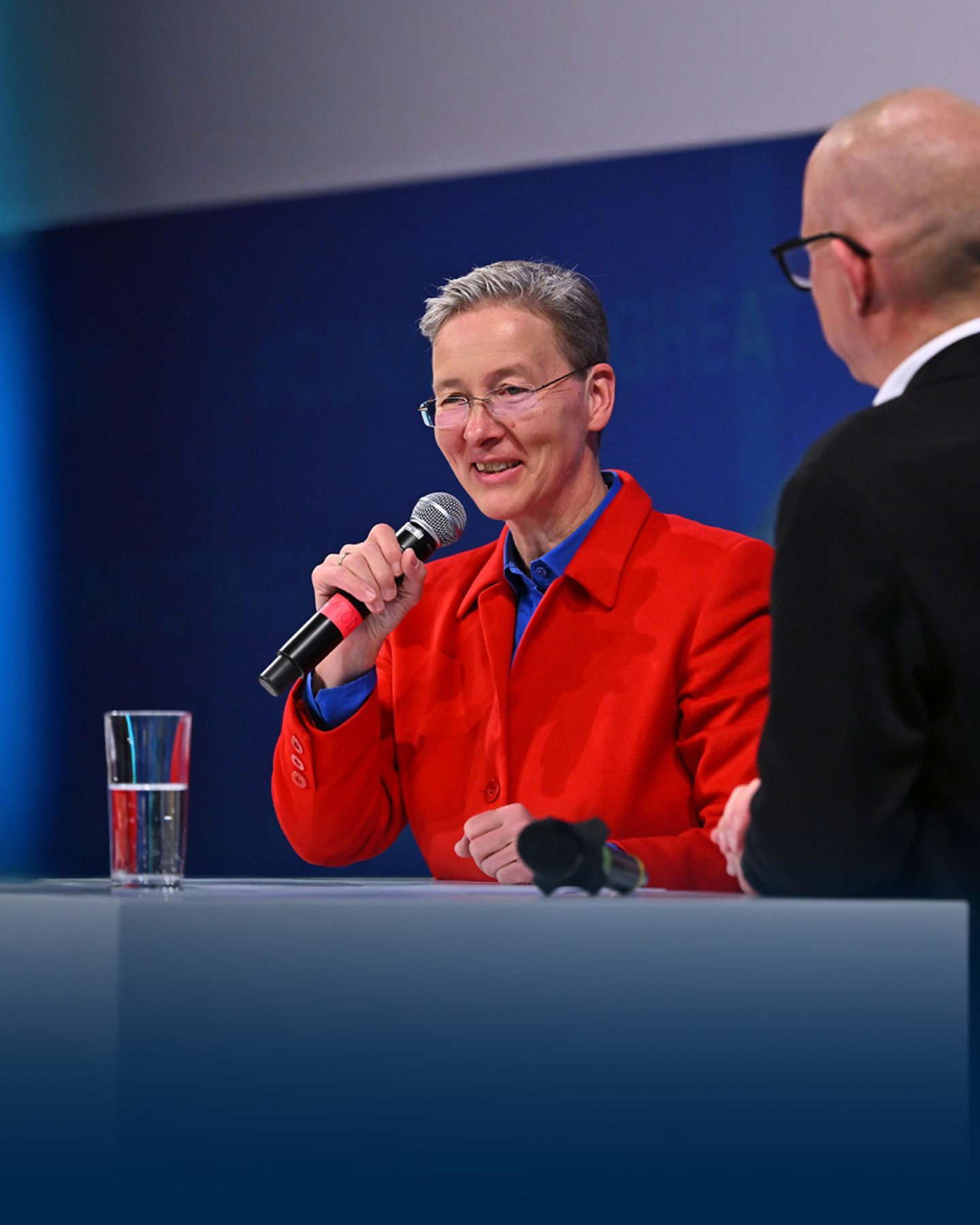
Minister for Economic Affairs Katharina Reiche and Minister for Construction Verena Hubertz had to cancel at short notice, but the panel at the German Heat Conference #connectingheat in Berlin was still well-staffed: Stephanie von Ahlefeldt, head of department at the BMWE, answered questions from moderator Klaus Stratmann (Handelsblatt).
When asked about the problems in the heating law (GEG) of the coalition government, she replies: „The first problem is that this interaction between different systems has probably not been thought through consistently.“
This view is shared by hall heating expert Thomas Kübler, who is calling for urgent improvements to the law, in particular a technology-neutral design and a move away from outdated standards, as these have frozen the technical status quo in certain areas at the level of 15 or 20 years ago.
The key points for the revision of the GEG should be in place before Christmas, Stephanie von Ahlefeldt replies to the crucial question of when concrete results can be expected. A plan that many in Germany would now like to rely on.
Confidence in planning security and political reliability has been shaken and must be rebuilt, emphasize the organizers of the German Heat Conference. For the fifth time, the leading associations BDH (German Heating Industry Association) and ZVSHK (Central Association for Sanitary, Heating, and Air Conditioning) have invited guests to this high-level event. Jan Brockmann, President of the BDH: „However, uncertainty caused by the Building Energy Act, contradictory statements on subsidies, and exaggerated expectations of municipal heating planning are inhibiting consumers“ willingness to invest." But trust and reliability are the basis of the heating transition.
The building sector accounts for around one third of Germany's CO₂ emissions. Industrial buildings account for a disproportionately high share of this, representing approximately 15% of building-related energy consumption. More than half of the 21.7 million heating systems are outdated, and more than four million are over 30 years old. In order to achieve climate targets, well over one million heating systems will have to be modernized each year in the future. According to the two associations, only with trust and predictability can the modernization of the building stock become a driver for climate protection, employment, and economic stability.
Source: Claudius Pflug | #connectingheat | BDH
#Heating Act #GEG #Heat transition #Energy transition #Climate protection #Building Energy Act #Heat conference #BDH #ZVSHK #connectingheat #Heating industry #Hall heating#Energy efficiency #Politics #Planing security #Innovation #Sustainability #Heat planning #Energy policy #Economy