Hall heating systems from KÜBLER.
Smart heating for industry, commerce, and municipalities
Whether today, tomorrow, or the day after tomorrow, you will always benefit from a consistent, comfortable indoor climate, sustainably low operating costs, and the assurance that you are well positioned for the future. Take the economical path toward CO₂ neutrality with KÜBLER.
The advantages of infrared hall heating systems in detail
The idea behind energy-saving hall heating systems from KÜBLER
Why? Because we are more interested in the spatial world of "Halle" than anything else.
- Because what works well in offices and residential buildings with room heights of up to three meters loses its effect in halls.
- Because warm air rises. But the heat is needed at ground level. And because there must be better solutions than simply directing air flows back down again.
- Because this swirls up even more dust than is absolutely necessary. The warm air rises again - and in the end far too much energy is wasted for far too little benefit.
What makes your hall special
Awards
Machen Sie die Energiewende zu Ihrem Vorteil – durch vielfach preisgekrönte Innovation
Infrared hall heaters or heat pumps?
KÜBLER's intelligent, energy-flexible infrared heating systems offer forward-looking solutions for new and existing buildings that will also meet the high demands of tomorrow. They can be operated flexibly with electricity, gas, or hydrogen, are at least as efficient as heat pumps, and combine this with the many other advantages of decentralized infrared hall heating systems:
- Highly efficient heat transfer in the usage area
- Flexible and controllable according to requirements, just like light
- Individual zone heating
- Fast heating times
- Naturally pleasant and consistent indoor climate
- Dust-free without drafts
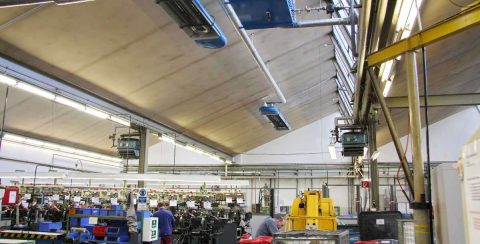
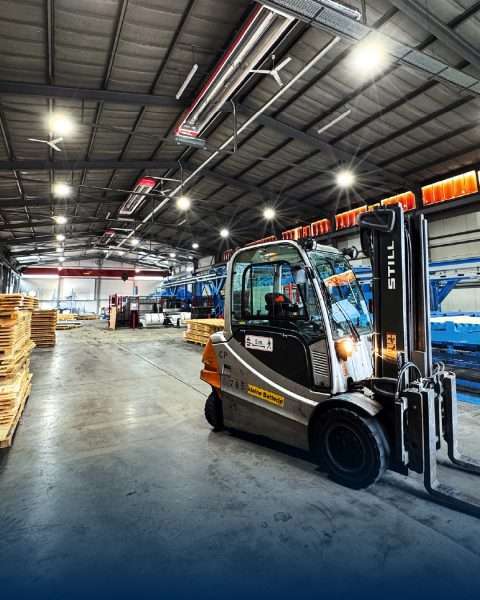
- Low space requirement under the hall ceiling
- No restrictions on hall use or conversion
- Easily adaptable to new usage profiles
- Hall roof available for PV use
- Highly functional even at sub-zero temperatures
- No climate-damaging coolants
Conclusion:
Save costs and CO₂ immediately without investment: Rent hall heating
The transparent service package includes all relevant services from a single source—including planning, installation, operation, control, maintenance, and energy management. In many cases, this is perhaps the easiest and fastest way to benefit from the advantages of modern hall heating systems. And it is very lucrative: KÜBLER's highly efficient infrared hall heating systems usually reduce energy consumption so significantly that your operating costs decrease despite the rental payment. This allows you to increase your liquidity, boost your bottom line, benefit from the superior advantages of state-of-the-art efficiency technology, and reduce your CO₂ footprint—an important factor in your ESG reporting.
For you, this means:
- Immediate CO₂ and cost savings from the first year of operation
- multiple award-winning heating and control technologies
- individual transparent contract design
- Long-term planning security and maximum flexibility
References and customer testimonials
Carbon-savings - since 1989
Discover
Let's take a look at the heating...
Say goodbye to high investment sums with low efficiency.
Frequently asked questions about hall heating systems
What is the best indoor heating system?
Why? Because conventional air heating systems or heat pumps with air blowers have to fill the entire room volume with hot air due to thermals (warm air rises like a balloon) – an expensive and difficult approach to control, especially in high halls. Infrared dark radiators also score points in halls thanks to other important advantages: they ensure a pleasant, draft-free, and dust-free working environment and, similar to light, can be controlled extremely flexibly. This means heating as needed with short heat-up times and the option of heating different work zones differently.
What types of hall heating systems are available?
The most important types include:
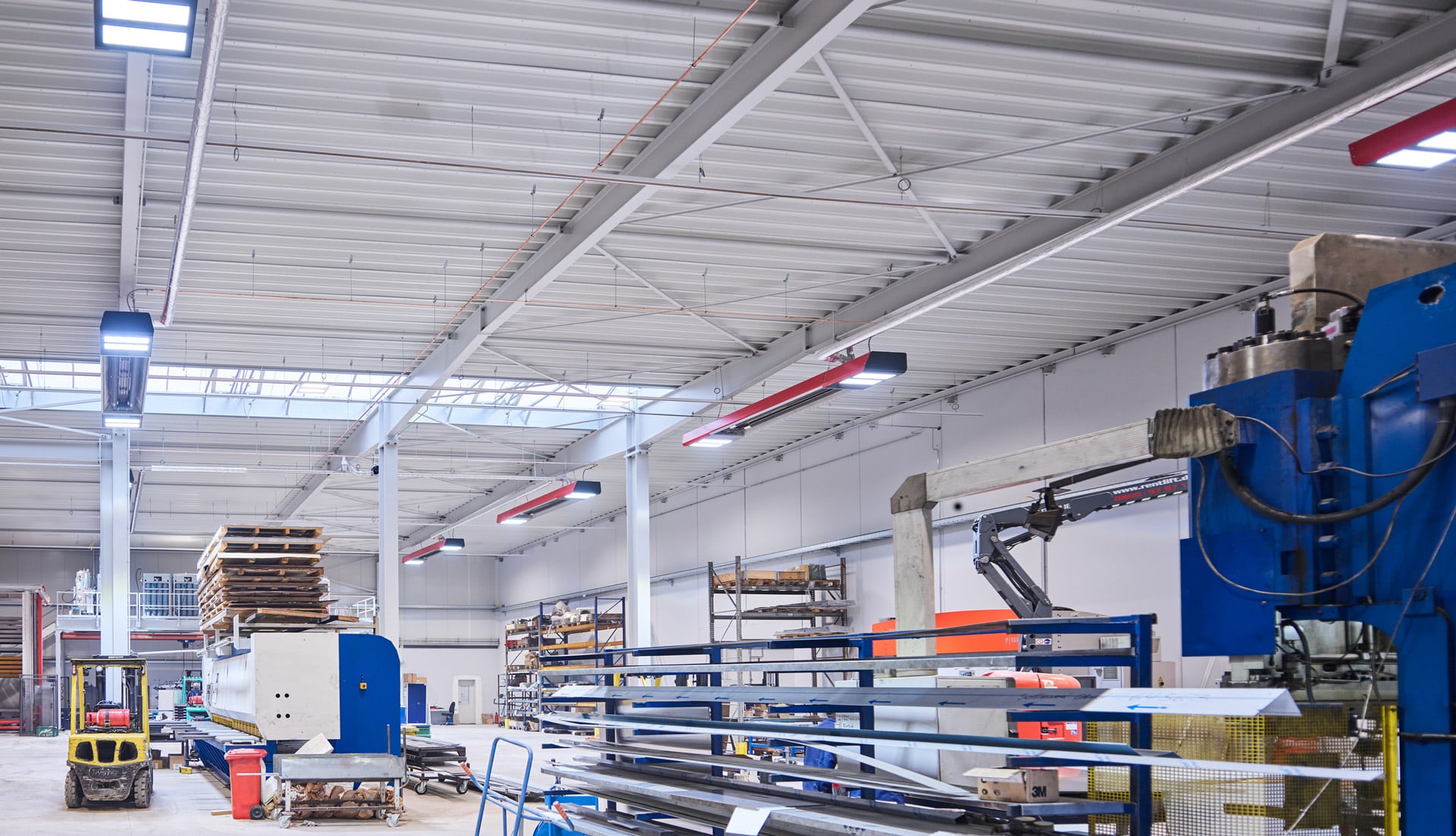
Gas infrared dark radiator – the ideal and proven, particularly efficient technology for commercial buildings, industrial buildings, and municipally used buildings.
Hybrid hall heating systems – KÜBLER's energy-flexible infrared systems (Fair.AIdH) can also be operated with a mix of different energy sources (e.g., gas, electricity, hydrogen). Hybrid systems that deserve their name, because unlike combinations of two different systems that are also called „hybrid,“ Fair.AIdH infrared heaters combine everything in a single system. This keeps the solution efficient, technically streamlined, and very economical.
Electric infrared hall heaters – ideal for heating halls with 100% CO₂-free energy today, especially when operated with cost-effective PV electricity.
H₂-ready hall heating systems – Hydrogen is becoming increasingly important in industry as a substitute for natural gas. Forward-looking and, given the right supply situation, already usable in Fair.AIdH systems today.
Hot air heating systems in combination with heat pumps or other heat generators – As the name suggests, these systems heat with warm air. They are therefore significantly less efficient in tall buildings.
The best solution depends on the room height, the usage profile of your hall, and the energy source you want to use. From a height of around 4 meters, energy-flexible infrared dark radiators are usually the most efficient, economical, and future-proof choice with excellent usability.


What is an infrared dark radiant heater?
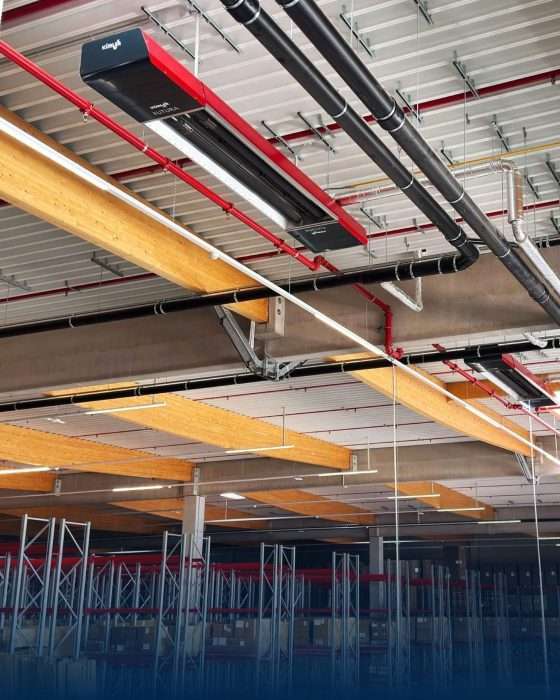
The key advantage: when infrared rays hit a surface, it heats up immediately. This effect is similar to the natural heating principle of the sun and can also be compared to light. Areas that need to be heated are essentially „illuminated“ – just like with a lamp. This has enormous advantages over conventional heating systems, as conventional devices primarily heat the air, which then rises and takes a very long time to warm up the work area on the hall floor.
Dark radiators therefore score points for their fast heating times, a very pleasant, draft-free room climate, and demand-based heating operation: different temperatures can be set depending on the work zone. And where no work is being done, the dark radiator heating system can simply be turned down. This also ensures that no energy is wasted.
Why are heat pumps in industrial buildings not nearly as efficient as in offices or residential buildings?
The consequences are long heating times, reduced efficiency, and a lack of flexibility in terms of switch-on and switch-off times, heating individual areas of the hall, and using the hall floor. In addition, large halls often require many units, which further increases investment and operating costs. Infrared hall heaters work much more efficiently here because they bring heat directly to where it is needed—to the hall floor and to the people.
What role do ceiling height, hall size, and usage play?
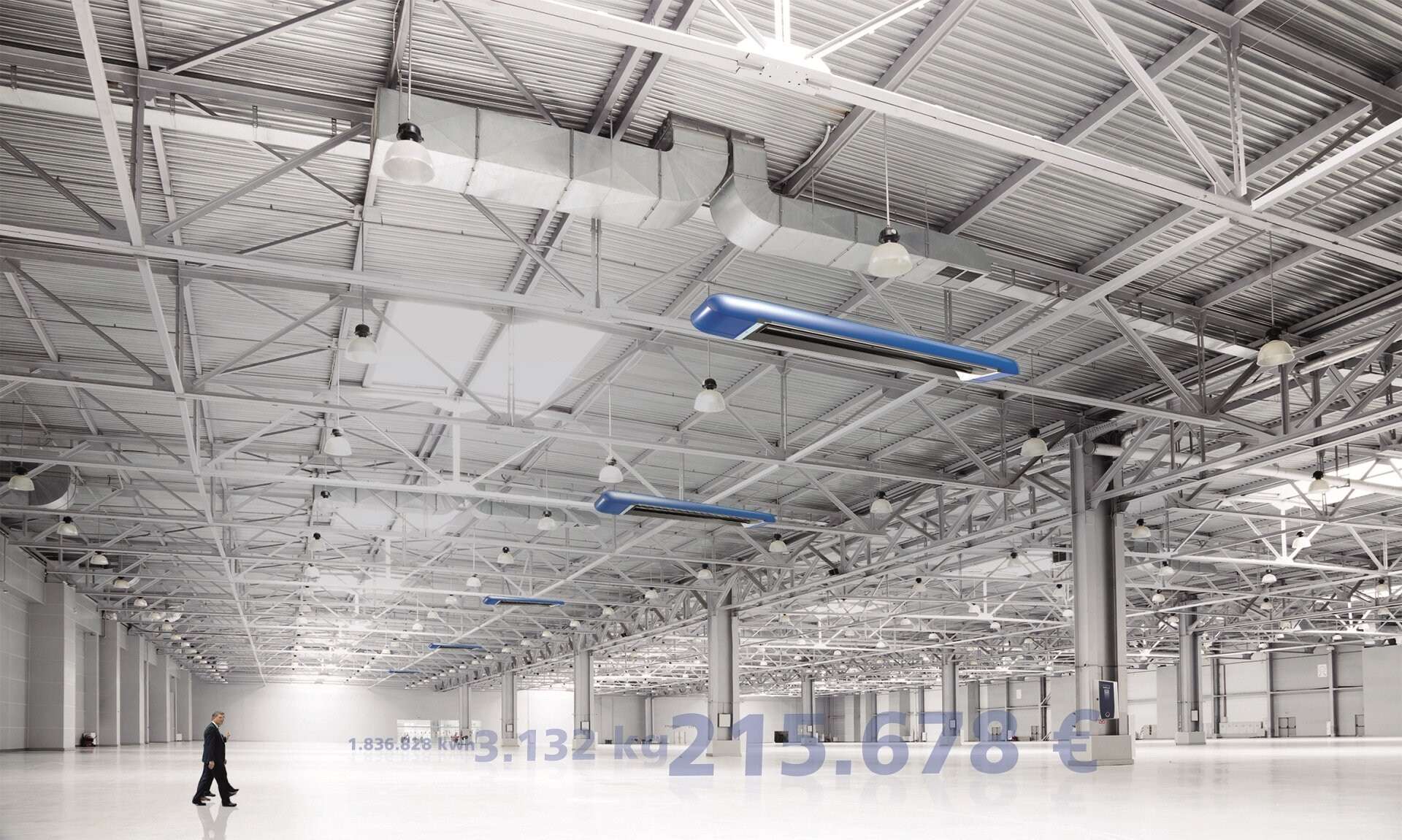
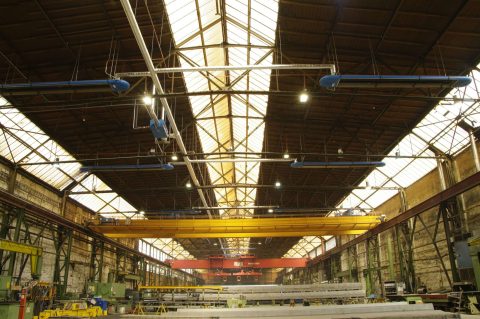
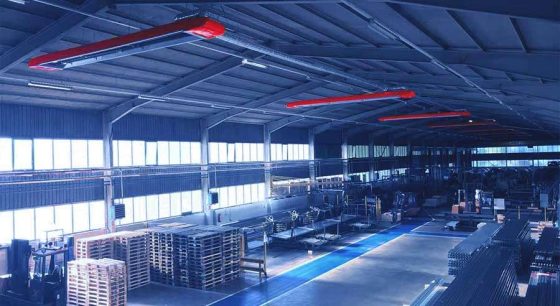
- Ceiling height: The higher the hall, the more important it is to have technology that provides heat directly below in the occupied area without any losses. From a room height of approx. 4 meters, infrared dark radiators are almost always the most efficient solution. While fan heaters have to fill the entire room volume with warm air from top to bottom (warm air is lighter than cold air and rises due to physical laws), infrared dark radiators use natural electromagnetic waves that only release their heat when they hit the hall floor and are absorbed. You know this from the sun. The space heated in this way indirectly transfers its heat to the ambient air, acting almost like a second heater – this is also referred to as bidirectional heat. In this way, only the area up to about 2 meters above the hall floor is heated – the part above it, and thus the largest part of the room volume, remains unaffected. This is what makes infrared dark radiators so efficient.
- Hall size: Size and floor plan influence the required heating output and the number of heating units. Infrared systems can be planned modularly and thus optimally designed for any hall dimensions.
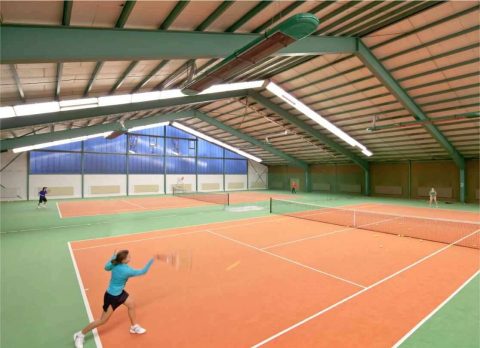
- Use: Whether in production, warehousing, events, or sports—usage determines where and how much heat is needed. With infrared, individual areas can be flexibly controlled as heating zones so that heating is only used where it is needed.
Thanks to their flexibility, ceiling heating systems can be optimally designed for almost any industrial building. The interplay of factors such as height, size, and use determines how your industrial heating solution can be configured in a particularly economical, legally compliant, and future-proof manner. Our experts take these conditions into account and develop a tailor-made concept for your building.