Infrared hall heating or heat pump?
October 7, 2025
Heating commercial properties in compliance with the GEG
Politically promoted, often problematic in practice: heat pumps quickly reach their limits in halls. Properly understood, the GEG leaves room for technological openness—and this is precisely where infrared hall heating systems come into their own.
Existing buildings: No obligation to use renewable energies
On the way to CO2In terms of free time, energy efficiency is perhaps the most important pillar of decarbonization—because, as „low-hanging fruit,“ efficiency measures to reduce CO2 usually simpler, faster, and more cost-effective than substitution with renewable energies. For this reason, high-efficiency solutions such as infrared hall heating systems from KÜBLER, which have been proven to achieve energy savings of at least 40 percent, are exempt from the obligation to use renewable energies (see GEG § 71m (2) Energy efficiency in the overall system).
Newly constructed halls: Infrared beats heat pumps
With FUTURA, FUTURA E, or ELEXTRA featuring the new Fair.AIdH technology, solutions are available for new buildings that use electricity and other renewable energies such as H2 can be operated, are at least as efficient as heat pumps, and at the same time offer all the advantages of decentralized infrared hall heating systems, which are so important for heating halls.
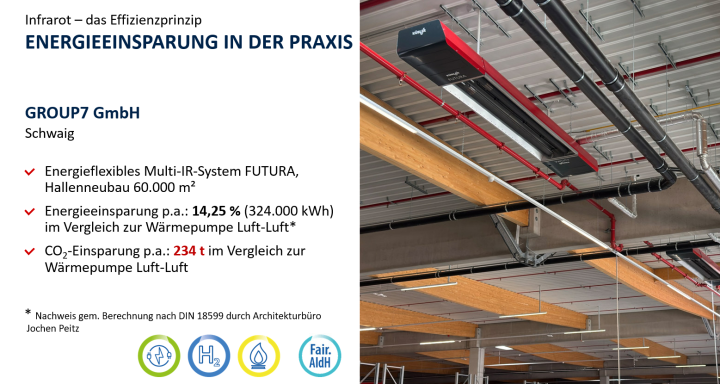
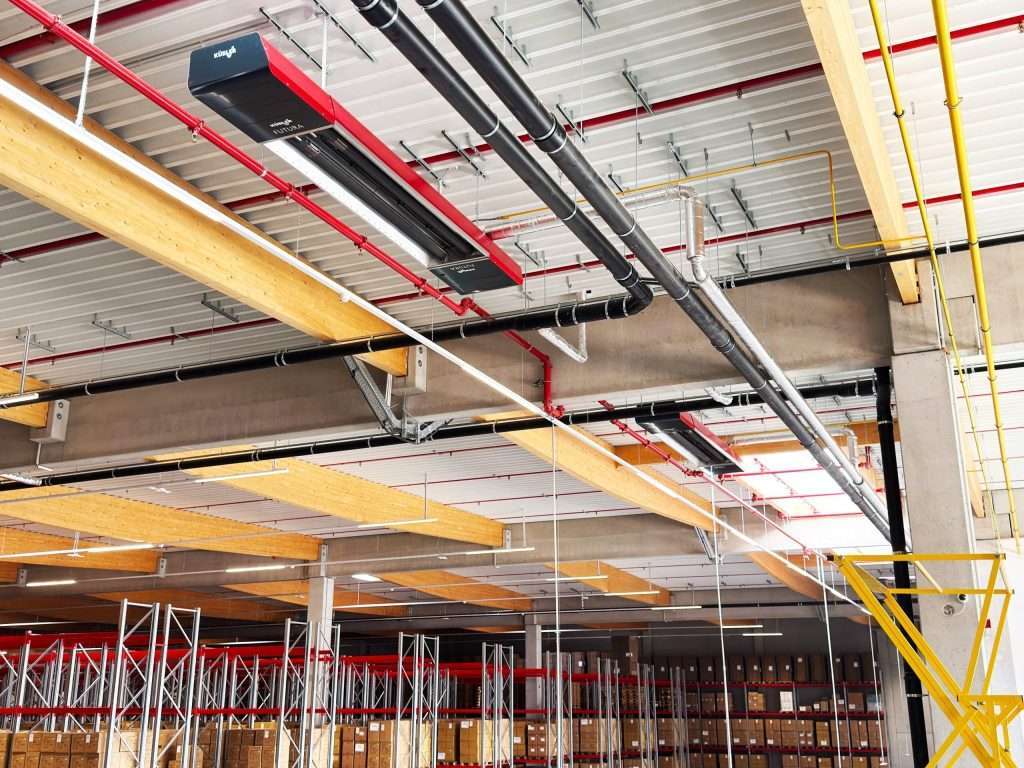
The new GROUP7 logistics hall was built in accordance with the DGNB Gold Standard and is heated using energy-flexible infrared hall heating technology (Fair.AIdH FUTURA). The savings mentioned are even higher in practice. Calculation: Jochen Peitz Architects, 42853 Remscheid.
(Source: KÜBLER GmbH Energy-saving hall heating systems)
Conclusion: Infrared is superior in halls for good reasons
|
|
|
|
|
|
|
|
|
|
|
|
|
|
Conclusion: Heat pumps can be an excellent solution for heating homes, offices, or other low-rise buildings in a climate-friendly way. However, they are not particularly suitable for large halls with their enormous dimensions and ceiling heights. In these buildings, technologies that have been specially developed for their demanding heating requirements are the best choice. Infrared hall heating systems are the most popular of these.
Everything you need to know about energy-saving hall heating systems in practice
Saving energy is a big issue - across all sectors. If you want to put an end to inefficient heating systems, our guide is just right for you!
Request a free guide
You might also be interested in
-
 A new heating system for your company's hall is a decision that needs to be carefully considered. Read this article to find out which facts speak in favor of an infrared radiant heater!
 -
 The "Innovative through research" seal is awarded to research-based companies that are committed to a strong innovation location in Germany with their development work. KÜBLER is once again one of these companies and has been awarded the prestigious seal.
 -
"Heating with the windows open" in private households is like "heating with the doors open" in production halls and warehouses. It's great if you can afford this in industry and commerce because production and business are obviously running - unfortunately, this is not a matter of course for many companies in times of coronavirus.
-
 Turnverein 1860 Mußbach e.V. is a traditional sports club with a long history. Since it was founded in 1860, it has got a large number of people of all ages and backgrounds moving and now has over 1,200 members. The club offers a wide range of sporting activities. Dieter Hackebeil, former chairman of the club and now (un)retired, was the main person responsible for the renewal of the heating system at the time and can "only praise KÜBLER to the skies." Satisfaction and conviction are the key words here.