Key points of the Building Modernization Act (GMG): More planning security for hall operators
February 27, 2026
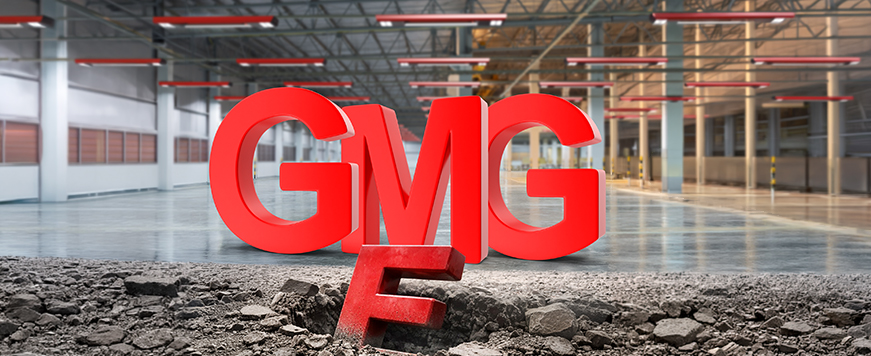
With the key points presented for a new Building Modernization Act (GMG), the German government is fleshing out its plans for the further development of building energy law. The aim is to reconcile climate protection, security of supply and investment capability.
While the public debate has so far focused heavily on residential construction, specific questions arise for industrial and logistics companies: what are the implications for large-volume non-residential buildings such as production and logistics halls? Thomas Kübler, an expert in energy-efficient hall heating systems, puts the key points into perspective from a practical point of view.
Climate neutrality remains the guiding principle
The German government is sticking to its goal of climate neutrality by 2045. The GMG is to come into force on 01.07.2026. The European Energy Performance of Buildings Directive (EPBD) is to be implemented using national leeway.
„For operators of hall buildings, this means above all planning security and continuity in terms of objectives, combined with greater flexibility in implementation,“ says Kübler. „Efficiency and decarbonization remain key requirements - but without a one-sided technological focus.“
Elimination of the 65 percent requirement
The obligation to operate new heating systems with at least 65% renewable energy, which was previously anchored in the Building Energy Act (Gebäudeenergiegesetz, GEG), is to be dropped. The requirements of the Heating Act (GEG §§ 71-71p) will be deleted.
This opens up new planning options, particularly in the construction of new non-residential buildings. In refurbishment, there are already alternative ways of achieving this through efficiency measures.
„For hall buildings, it is crucial that in future the focus will once again be more on building-specific design,“ explains Kübler. „Large room volumes, different usage profiles and high air exchange rates require individual solutions.“
Technological openness and biogenic energy sources
The key points provide for owners to be given greater freedom of choice when replacing their heating systems in future. In addition to electric systems such as heat pumps, gas or liquid fuel-based systems will continue to be permitted, provided they are gradually operated with CO₂-neutral components.
From 01.01.2029, a biogenic share of at least 10 percent is planned, which is to increase gradually. The CO₂ price will no longer apply to this proportion.
„This creates an additional transformation option for operators of industrial buildings,“ says Kübler. „Hybrid and energy-flexible systems in particular can be gradually decarbonized in this way.“
Prospects for industry and commerce
As things stand, industrial and commercial sectors are to be exempted from certain quota regulations. A final review remains to be carried out.
If this regulation is confirmed, it would facilitate tailor-made solutions for production and logistics locations without jeopardizing the overarching climate targets.
Investment security and funding
The GMG is intended to end a phase of investment restraint caused by regulatory uncertainties. The federal subsidy for efficient buildings (BEG) for climate-neutral heating solutions is to be continued until at least 2029.
„Reliable framework conditions are crucial for companies,“ emphasizes Kübler. „Planning security makes it possible to tackle modernization projects strategically and not put off investments any longer.“
Conclusion
The GMG cornerstones mark a readjustment in building energy law. For operators of production and logistics halls, this results in more technological openness for economic decarbonization measures and greater planning leeway.
At the same time, gradual decarbonization remains a binding framework. Efficiency, energy flexibility and economic viability will thus become key criteria for future investment decisions in non-residential construction.
You can find out more about the exact key points here: GMG key points
Everything you need to know about energy-saving hall heating systems in practice
Saving energy is a big issue - across all sectors. If you want to put an end to inefficient heating systems, our guide is just right for you!
Request a free guide
Interested in our press photos?
Would you like to download all images from the article in the highest quality? Simply click on the button below and enjoy our press photos in the highest resolution!
You might also be interested in
-
 „Anyone who is nominated for the ‘Großer Preis des Mittelstandes’ belongs to the elite of German SMEs. This nomination alone is already an award of the highest quality,“ emphasizes Barbara Stamm, President of the Bavarian State Parliament. Outstanding achievements in five areas In the competition, the KÜBLER company is assessed in its entirety and its role within society. The [...]
 -
 Ludwigshafen - Clear messages, clear expectations: At the annual reception of the Rhineland-Palatinate Economic Council at the main site of KÜBLER GmbH, host Frederic Renz had clear words to say about the economic situation. „SMEs need what all companies in Germany urgently need: a clear direction and reliable political framework conditions. If you want economic growth, you have to create planning security,“ emphasized the Managing Director of the hall heating specialist. Around [...]
 -
 Heating halls efficiently, economically and functionally is a challenge. Because in these huge buildings with ceiling heights that often reach 20 meters, a lot of energy can quickly be consumed - energy that is expensive and, depending on the heating technology used, also causes high emissions. The building stock is often still equipped with inefficient and [...]
 -
 After KÜBLER Energiesparende Hallenheizungen was already recognized as a Top Company in 2023 and 2024, the company also received the kununu Top Company Award for an outstanding corporate culture this year. The employer seal recognizes companies with a high level of employee satisfaction and is awarded exclusively on the basis of independent reviews on kununu. Approximately five percent of all companies on kununu are recognized as [...]