Pure electricity or energy flexibility in industrial buildings?
August 20, 2025
Heating halls in times of energy transition
What energies will we rely on tomorrow? Which technology will be the right one in the future? If these questions cause a great deal of confusion in the private sector, they bring even more uncertainty to the field of industrial and commercial buildings, which have completely different heating requirements. Experts provide answers to the most important questions about future-proof heating strategies.
Basically, it's quite simple: if the new heating law (GEG 2024) had not been introduced and if the amendment had been less ideological and more technically sound, the heat pump debate would have remained where it belongs: in buildings suitable for this technology. But now, industrial buildings are also grappling with a technology that, in most cases, cannot even demonstrate its recognized strength—energy efficiency—in these buildings.
The heat pump hype is a thing of the past
One thing is clear: the hype surrounding heat pumps, which were politically promoted with high subsidies, has cooled down significantly. Combining heat generators with underfloor heating has proven to be too inflexible in industrial buildings and also poses other problems. And combining them with warm air blowers seems almost like a step back to the Middle Ages in heating technology, as this once widespread heating method is now considered inefficient and outdated in industrial buildings due to convection (rising warm air).
One thing is clear: the focus must be on the heating transition and decarbonization. That is precisely why it is so important to use the best technical options available to optimally solve the specific challenges posed by hall buildings—whether in the industrial, commercial, sports, or event sectors. Because:
Industrial buildings have completely different heating requirements than offices or residential buildings.
But which technology is the right one? To answer this question, you need to understand industrial buildings. What are the physical conditions in these giant spaces with ceiling heights often reaching 8, 15, or even 20 meters? How are they used? Anyone who has ever stood in a 15-meter-high workshop hall or walked through a 60,000-square-meter logistics hall will realize that the familiar heating systems found in apartments or offices are of little use here. This is especially true when the goal is to consume as little energy as possible, prioritize environmental protection, and keep costs affordable.
Heating more efficiently with—not against—the laws of physics
The ideal heating principle for these tall and large buildings is borrowed from nature: infrared. Just as the sun's rays travel long distances from space to Earth, this also works in halls. Infrared heaters under the hall ceiling emit radiation that only takes effect when it hits and is absorbed somewhere. So it does not generate hot air. While the warmest point with air blowers is always physically below the hall ceiling, with infrared heaters it is naturally always below – on the hall floor, where people and machines are, i.e. where work is being done. Put simply, this is why infrared heaters are so incredibly efficient in halls. In practice, savings of 50 to 70 percent are regularly achieved. Infrared heat is pleasant, draft-free, and does not stir up dust. This is also known as „heating with the laws of physics.“
Heating as needed saves a lot of energy, reduces emissions, and lowers heating costs.
Infrared heaters also have the advantage of being very flexible to control. Technically speaking, infrared rays are electromagnetic waves, just like light. And like light, they can be easily switched on and off or directed. At weekends and on public holidays, for example, the heating is simply switched off or at least turned down to the minimum temperature. In large hall buildings with their different work areas and storage areas, heating zones can be set up and controlled so that only those areas where work is actually being done are heated. According to the motto: „The most economical heating is the one that is not in operation.“
Infrared heat has long been proven effective in halls
Infrared heaters are available in various designs. In general, bright radiators and dark radiators powered by natural gas or liquid gas are used in industrial buildings. The latter differ in that they feature closed combustion (hence the term „dark“) and controlled exhaust gas routing.
The energy transition requires energy-flexible solutions
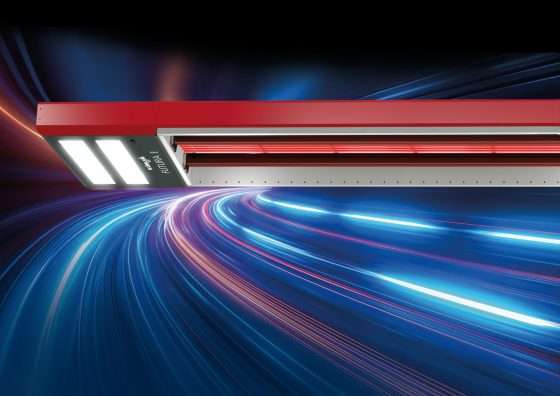
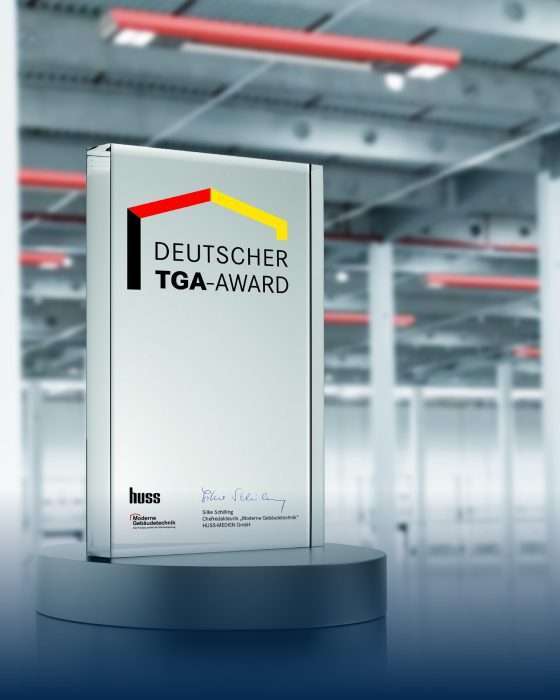
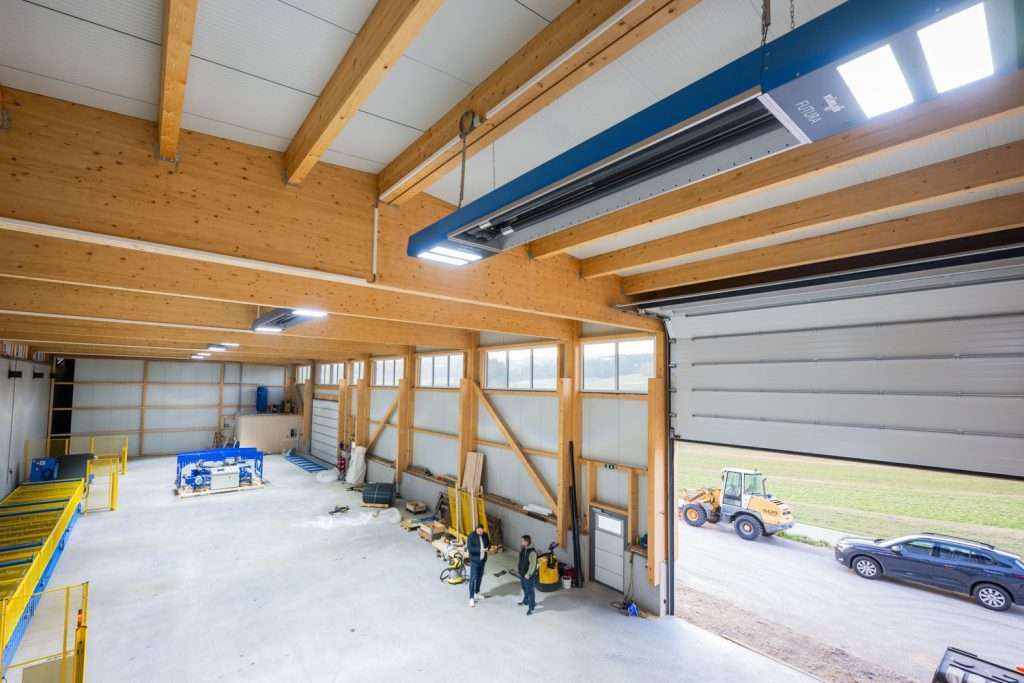
The latest generation of infrared heaters is known as Fair.AIdH technology. Systems in this category can be operated flexibly with renewable energies such as electricity, hydrogen, or biogas. In most cases, they can also burn natural gas or liquid gas during the transition period to ensure the necessary operational reliability in work processes. One example of this Fair.AIdH technology is the FUTURA multi-energy system, which, as a 2-in-1 system, can also integrate LED hall lighting. This is particularly useful in new hall constructions, as this option allows for the consolidation of otherwise duplicated cabling, control units, and maintenance work for heating and lighting. FUTURA was the first Fair.AIdH technology on the market and has already received numerous awards for its contribution to climate protection and sustainability.
Electric infrared heaters are often the first step toward CO₂-free living.
Fair.AIdH technology is now also available for operation using only (PV) electricity. ELEXTRA, with 10, 20, or 30 kW, is the modern electric infrared heater with the widest range of outputs. FUTURA E is the electric version of FUTURA. It can be easily retrofitted for hydrogen as soon as this renewable energy source is available locally or via the grid.
One example of the use of FUTURA E is the master craftsman's business Buxbaum Dach in Langschlag, Lower Austria, which already heats its new hall with this system in a largely CO₂-free manner using PV electricity. Entrepreneur Christoph Buxbaum sums up his opinion on the subject of hydrogen retrofitting as follows: „We'll see what the future brings. The good thing is that we have the option of using other energy sources as well.“ More information on the Buxbaum Dach project can be found in the practical report: Efficient hall heating: FUTURA E infrared solution
Tomorrow's stable energy supply needs molecules and electrons
But which energy source will shape the future? Experts agree that the energy transition must be based on both molecules and electrons, i.e., on renewable gaseous energies and electrical energy. The reason for this lies in the natural volatility of renewables: sometimes the sun shines and the wind blows, sometimes it doesn't – solar and wind energy are not continuously available by their very nature. For good reason, politicians have backtracked after initial hesitation and are now promoting the ramp-up of hydrogen. Research and development is currently underway at full speed to produce the volatile energy source H₂ cost-effectively. A particularly promising approach is to convert surplus PV electricity in the summer into H₂ and use it directly as gas in the winter without further conversion losses. „There's a lot of potential in approaches like these,“ says hall heating specialist Thomas Kübler. After all, research departments and institutes still have around 20 years until the switch to climate neutrality is flipped in 2045.
Everything you need to know about energy-saving hall heating systems in practice
Saving energy is a big issue - across all sectors. If you want to put an end to inefficient heating systems, our guide is just right for you!
Request a free guide
Interested in our press photos?
Would you like to download all images from the article in the highest quality? Simply click on the button below and enjoy our press photos in the highest resolution!
You might also be interested in
-
 While the public debate has so far focused heavily on residential construction, specific questions arise for industrial and logistics companies: what are the implications for large-volume non-residential buildings such as production and logistics halls? Thomas Kübler, an expert in energy-efficient hall heating systems, explains the key points from a practical perspective. Climate neutrality remains the guiding principle The German government is sticking to its goal of climate neutrality [...]
 -
 „Anyone who is nominated for the ‘Großer Preis des Mittelstandes’ belongs to the elite of German SMEs. This nomination alone is already an award of the highest quality,“ emphasizes Barbara Stamm, President of the Bavarian State Parliament. Outstanding achievements in five areas In the competition, the KÜBLER company is assessed in its entirety and its role within society. The [...]
 -
 Ludwigshafen - Clear messages, clear expectations: At the annual reception of the Rhineland-Palatinate Economic Council at the main site of KÜBLER GmbH, host Frederic Renz had clear words to say about the economic situation. „SMEs need what all companies in Germany urgently need: a clear direction and reliable political framework conditions. If you want economic growth, you have to create planning security,“ emphasized the Managing Director of the hall heating specialist. Around [...]
 -
 Heating halls efficiently, economically and functionally is a challenge. Because in these huge buildings with ceiling heights that often reach 20 meters, a lot of energy can quickly be consumed - energy that is expensive and, depending on the heating technology used, also causes high emissions. The building stock is often still equipped with inefficient and [...]